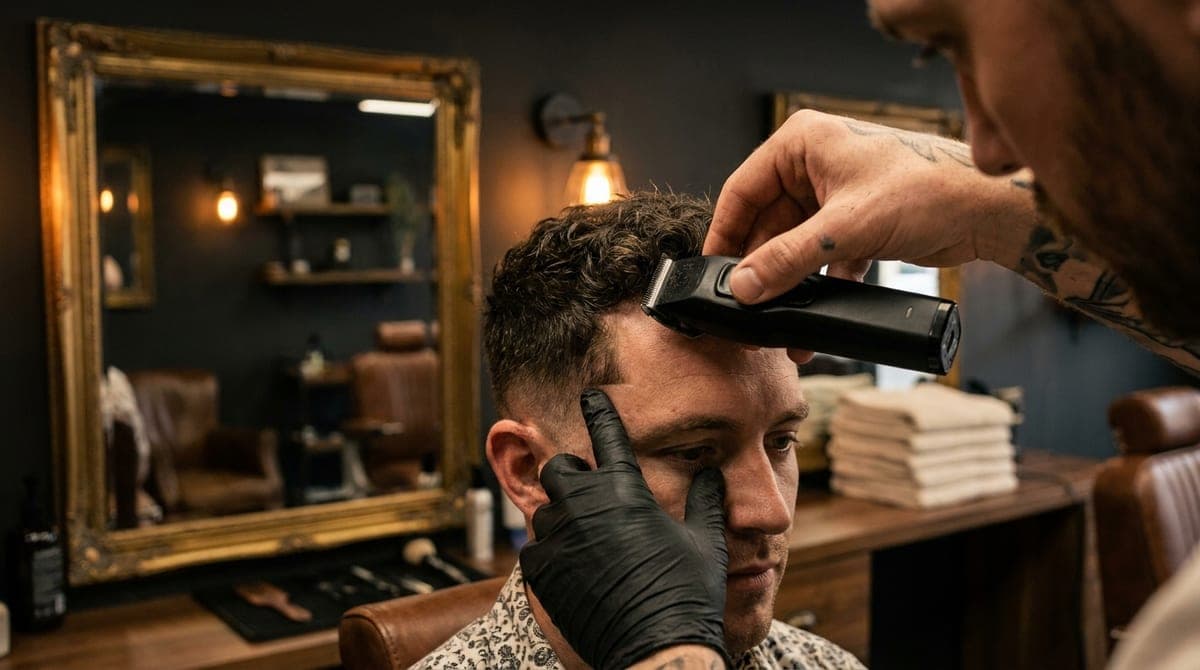
A curly hair fade is the same clipper work at the sides as any other fade. What changes is everything above the fade line. Curls need weight to hold their shape, so the top is cut dry with scissors rather than stripped down with clippers, and the blend has to sit low enough that the curl has somewhere to land. Get that part wrong and you walk out with a solid ball of hair on a bare stem.
Curly Hair Fade: The Cuts That Work
Which curly hair fade suits your curl pattern, why cutting curls wet costs you length, and what to ask for so the top keeps the shape you wanted.
6 min readGolden Scissors, Maida Vale, London
Cut it dry, or the guard number lies to you
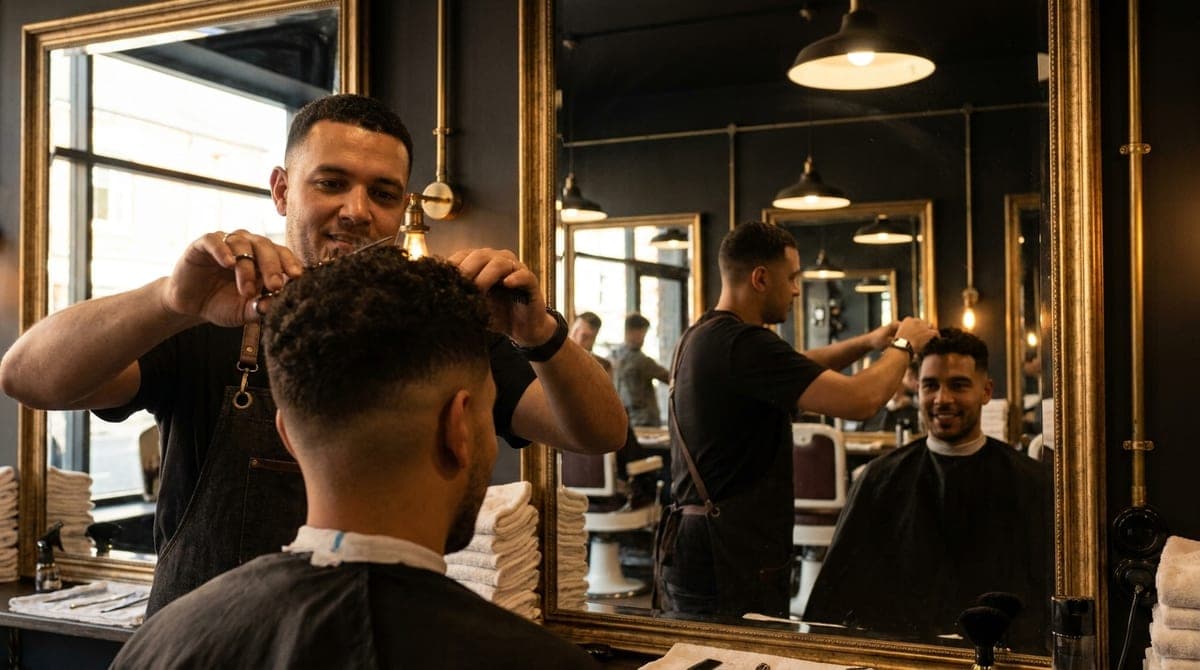
Wet curly hair hangs long and almost straight. Dry, it springs back up. Two inches of wet curl can end up sitting at three quarters of an inch once the water leaves it, and that gap is where most bad curly haircuts come from. The barber cuts to what he can see in the mirror, the hair dries on the walk home, and you have lost twice what you asked for.
So we cut curly tops dry, in the pattern the hair actually falls in, and we take less off the first pass than you would think. On the sides it matters far less, because clipper work is clipper work either way. The moment scissors come out on top, though, wet hair is a guess.
If you have ever had a cut that looked right in the chair and wrong an hour later, that is almost certainly what happened to it. Worth saying out loud as you sit down: cut it dry.
Which curly hair fade suits your curl pattern
The fade itself does not care about curl. What curl decides is where the fade line should sit and how close to skin it should go, because the density above the line is what makes the contrast read.
Loose waves and soft curls. Taper or low fade. There is less bulk on top to balance against, so a high skin fade leaves the length looking like it is hovering rather than sitting on something. Keep the blend low and keep some weight in the sides. If you are torn between finishes, our skin fade and taper fade comparison goes through how each one ages.
Springy mid curls. Mid fade, either finish, and this is the easiest hair in the shop to fade. There is enough density on top to carry almost any height you pick, so the decision comes down to taste and how often you can get back in.
Tight coils. Skin fade, as high as you fancy. Bare skin under a full, dense top is a contrast no other texture gives you as cleanly, and it grows out kindly too, because regrowth reads as more of the same shape rather than as a blurred line.
Curly and thinning at the crown. This is the one to be careful with. Stripping the sides to skin makes a sparse crown look sparser by comparison, and curl will not hide it the way it hides everything else. A taper keeps the argument quiet.
Fade height and fade finish are two separate choices and men mix them up in the chair every week. Where the line sits is one decision, which our guide to the mid fade sets out; whether the bottom goes to skin or to stubble is the other one entirely.
The join is the hard part
On straight hair the top and the sides meet in a gradient nobody notices. On curly hair they meet at an edge, because the curl above the fade line has volume that the clipper work below it does not. Leave that edge unmanaged and you get exactly the shape everyone is trying to avoid.
A barber who cuts curls regularly deals with it without being asked. Usually by dropping the fade line lower than he would on straight hair, so there is a band of shorter curl between bare skin and full length, doing the work of a gradient.
The other half of the job is the outline of the top itself. Curls left as a hard circle will read as a hard circle from across the room, so the perimeter gets weight taken out of it with scissors, following the curl rather than cutting across it, and the corner where top meets side gets rounded rather than left at a right angle.
None of that is thinning, and the distinction matters. Thinning shears taken through the middle of curly hair break up the clumps that make curls sit together in the first place, and the result is a top that looks fluffy on day one and frizzy by day four. Weight comes off the outside edge, not out of the middle.
The line up question
Curly hairlines are rarely straight. Most have a natural dip somewhere, a corner that sits further back on one side than the other, or a patch of finer hair at the temple where the curl gives up. A hard line up squares all of that off. It looks sharp on the day, and it commits you, because hair removed to make an edge straight has to be removed again every fortnight or the line grows back crooked.
Our default is to follow the hairline rather than redraw it, and we will say which one we are doing before the trimmers go anywhere near your temple. If you want the hard edge, ask for it by name. What a line up actually involves covers the difference properly.
Your sides and your top are on different clocks
This is the part that saves curly-haired men money and nobody tells them.
The top of a curly cut can go six weeks without anyone noticing, because curl absorbs length instead of displaying it. An inch of growth on straight hair is obvious. An inch of growth on a coily top is a slightly bigger version of the same shape.
The sides do not work like that. A skin fade on curly hair is at its sharpest for about ten days, the same as on anybody else, and once stubble fills in under the blend the contrast you paid for has softened. Two to three weeks and it wants doing again.
So the two halves of your haircut are on different schedules, and there is no rule saying they have to be done in the same appointment. Most of those fortnightly visits do not need to touch the top at all. Sides and neckline only, length untouched on top, and then every third or fourth time you let the scissors do their work up there. That booking exists on our menu as a skin fade on the sides only, £16 against £17 for the full thing, both in a half hour slot.
Before you get in the chair
The one thing that makes a curly cut go well has nothing to do with what you ask for.
Come in with your hair in its own pattern. Washed a day or so before, dry, no product setting it into a shape it does not naturally take, and not flattened under a beanie or a cap on the way over. If you turn up straight out of the shower or with the sides pressed down by a hood, the first ten minutes of your appointment go on working out what your hair does when left alone, and we are guessing at the rest.
We are cutting to your curl. We can only cut to the curl we can see. Book a chair and turn up with your hair doing whatever it does on an ordinary Tuesday.
Common questions
- Which fade is best for curly hair?
- It depends how tight the curl is. Loose waves suit a taper or a low fade because they need the weight left in. Tight coils carry a high skin fade better than any other texture, because there is enough density on top to balance the bare skin underneath.
- Should curly hair be cut wet or dry?
- Dry on top. Wet curl hangs long and straight and then springs back up as it dries, so cutting it wet is guessing at your finished length. The clipper work at the sides is fine either way.
- How often does a curly fade need cutting?
- The sides want doing every two to three weeks. The top can often go six weeks or more, because curl hides regrowth instead of displaying it. A lot of men here book sides-only visits in between.
- Will a fade make my curls frizzy?
- Not by itself. Frizz on a fresh cut usually means the top was thinned out too far, which breaks up the clumps curls need to sit together. Ask your barber not to over-thin it.
- How much is a curly fade at Golden Scissors?
- £17 for a skin fade, which takes half an hour, or a taper fade, which takes 40 minutes. A skin fade on the sides only, keeping your length on top, is £16 in the same half hour.
Read next
Style Guide
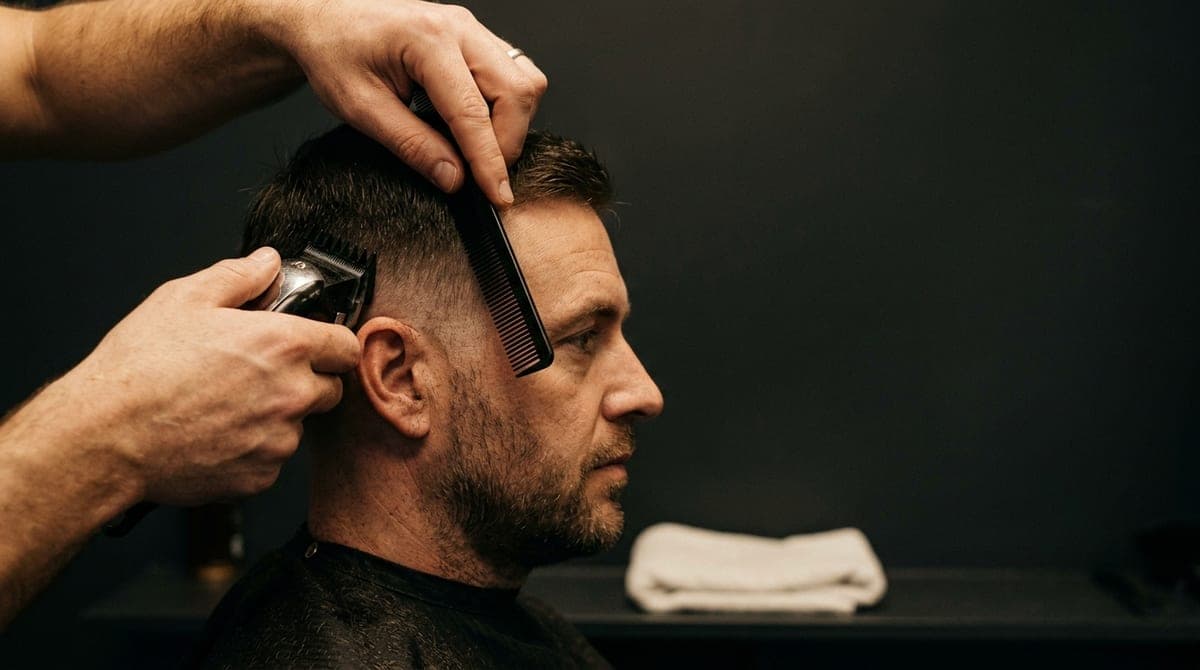
Skin Fade vs Taper Fade: The Difference
A skin fade goes to bare skin, a taper fade keeps a little length. Which one suits your hair, your head shape and how often you can get back to the chair.
5 min
Style Guide
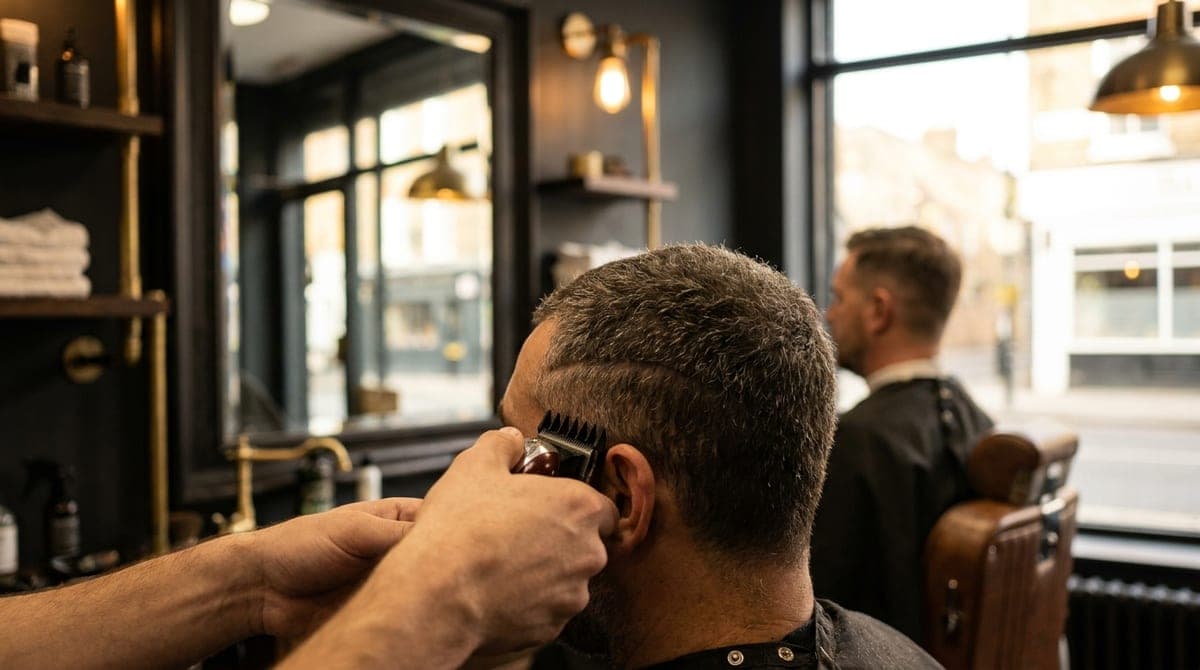
The Mid Fade Haircut and 19 Ways to Wear It
Where a mid fade starts, how it compares with a low and high fade in one table, the sentence to say in the chair, and 19 tops it suits. From Harrow Road.
7 min
Style Guide
What Is a Line Up Haircut? Edges Explained
What a line up haircut is, how it differs from an edge up or a shape up, who it suits and what to ask for. From the barbers on Harrow Road.
6 min