An Ivy League haircut is a crew cut left long enough on top to part. The back and sides are tapered short with clippers, the top is cut with scissors so it runs from about 3.5 to 4cm at the front down to around 1.5cm at the crown, and the front is combed to one side. It is a side parting you can wear for five weeks without styling it.
Ivy League Haircut: What to Ask the Barber
The Ivy League haircut zone by zone in millimetres, why the crown decides whether it works, and how long it takes to grow into one from a crew cut or buzz.
6 min readGolden Scissors, Maida Vale, London

The short version
- Ask for a long crew cut with a side parting: scissors on top, a taper on the sides, no skin.
- The crown matters more than the front. If yours sticks up, it gets cut shorter there, not longer.
- From a crew cut you are about a month away. From a grade two buzz, nearer three.
The Ivy League haircut, zone by zone
Every gallery of this cut shows you the finished side parting. None of them tells you the numbers, and the numbers are the haircut. This is how we cut it on straight, medium-thick hair:
| Zone | Length | How we cut it |
|---|---|---|
| Front hairline | 35 to 40mm | Scissors, left long enough to lie across |
| Middle of the top | 25 to 30mm | Scissors over comb, shortening as it goes back |
| Crown | 12 to 18mm | Shortest point on top, cut to sit flat |
| Sides above the ear | 9.5 to 13mm (a three or a four) | Clippers, blended into the top |
| Around the ear and neck | 3 to 6mm (a one or a two) | Tapered, tidied with the clipper edge |
| Neckline | Natural or tapered | Never squared off on this cut |
Two things in that table do the work. The top gets shorter from front to back, so the weight sits at the hairline where the parting is and nowhere else. And the sides stay at a three or a four rather than going down to skin, which is the difference between an Ivy League and a comb over fade. The comb over keeps its length right across the top and leans on the contrast with the sides. The Ivy League is quieter at every point.
Fine hair can go a few millimetres longer on top, which helps it cover. Thick hair can come down to the shorter end, or it will push the parting open by the end of the day.
Why the crown decides it
Most men worry about the front. The cut actually succeeds or fails at the back of the top.
The crown is where your hair grows out of a whorl, and on most heads it grows in a different direction from everything around it. On a longer cut that does not matter, because the weight lies it down. On an Ivy League the crown is the shortest part of the top, and hair at 15mm that is growing the wrong way stands straight up. If you have ever had a short cut that looked fine in the mirror and then showed a tuft in every photo taken from behind, that is what happened.
So we cut the crown to the whorl, not to a number. If yours spins hard, it goes a few millimetres shorter so it has nothing to lift. If you have a double crown it goes shorter still, and we blend the top into it a little further forward. That is also why it is worth telling us which side you part, before anything is cut. The parting runs back towards the crown, and the two have to agree. Finding the side your hair already splits on takes a wet comb and ten seconds, and we explain how to find your natural parting alongside the comb over.
Which hair holds it
Thick, straight or slightly wavy hair is what this cut was made for. It lies down, it parts cleanly and it needs nothing on it.
Fine hair does better than you might expect. The parting carries the front across, the short crown hides how thin it is at the back, and nothing is long enough to separate into strands.
Tight curls are the exception. At 4cm the front will not lie in a parting without a lot of product and a lot of patience. What we usually cut instead is the same shape with the front left textured and pushed to one side rather than combed, which keeps the outline of an Ivy League without a fight every morning.
If your temples are going back, part on the side with more hair at the corner. The comb carries the front across the thinner side, rather than opening a gap beside it.
Getting there from a shorter cut
Scalp hair adds roughly a centimetre every month, which we break down cut by cut in how fast hair actually grows. Run that against the front length you need and the timetable is simple.
- From a crew cut: the front is usually around 25mm, so you are 10 to 15mm short. Four to six weeks. Crew cuts grow into this one naturally, which is why the crew cut guide calls a neglected one an accidental Ivy League.
- From a grade two buzz: 6mm all over means about three months before the front has enough to part.
- From longer hair or a comb over: one visit. We take the top down and graduate it in the same sitting.
On the way up from a buzz, keep booking the sides. Have them kept at a three and leave the top alone, and you never pass through the stage where everything is one awkward length.
Product, if any
Traditionally this cut was set with butch wax, a stiff, shiny stick that held every hair exactly where the comb put it. You do not need it now. Comb the parting in while the hair is damp from the towel and most heads will hold it until evening with nothing on.
If yours drops by lunchtime, use a pea of matte cream or soft clay rubbed through from the crown forward, then comb it. Anything with shine shows the comb lines, and on a cut this short that looks dated rather than smart.
How to book it here
On our list the Ivy League is the Haircut, £15 for 30 minutes. It is not the £10 Crew Cut, which is one guard over the whole head and leaves nothing to part. Say "Ivy League, part on the left" when you sit down, or show us where it falls, and the rest is the table above.
It wants doing every four to five weeks. At six the front is long enough to fall in your eyes and the sides have lost their taper, but it never stops looking like a decent haircut, it just becomes a longer one. If you are booking it for something specific, come in about a week before. The taper has softened by then, and it looks like your hair rather than a new cut.
Common questions
- Is an Ivy League the same as a Harvard clip?
- Yes, two names for one cut. You will also see it called a long crew cut, which is the most useful description of the three because it tells the barber where to start.
- Is an Ivy League the same as a short back and sides?
- Not quite. A short back and sides only describes the sides and says nothing about the top. The Ivy League fixes the top as well: graduated from front to crown, long enough to part, and that is what you are actually asking for.
- Can I wear an Ivy League with a fade?
- You can, and plenty of men do. Keep it a low taper rather than a high skin fade, because once the sides go to skin the parting starts to look like a comb over fade instead.
Read next
Style Guide
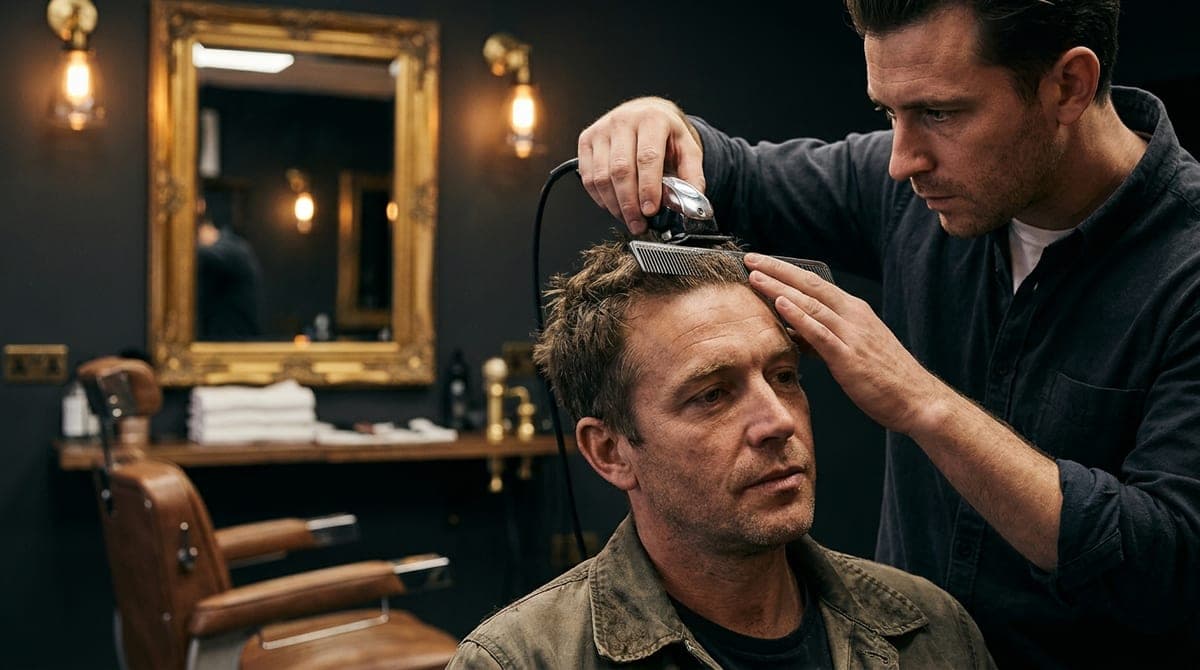
What Is a Crew Cut? Not the Same as a Buzz
A crew cut is tapered sides under a top that slopes from an inch at the front to short at the crown. See it side by side with a buzz and what to ask for.
7 min
Style Guide
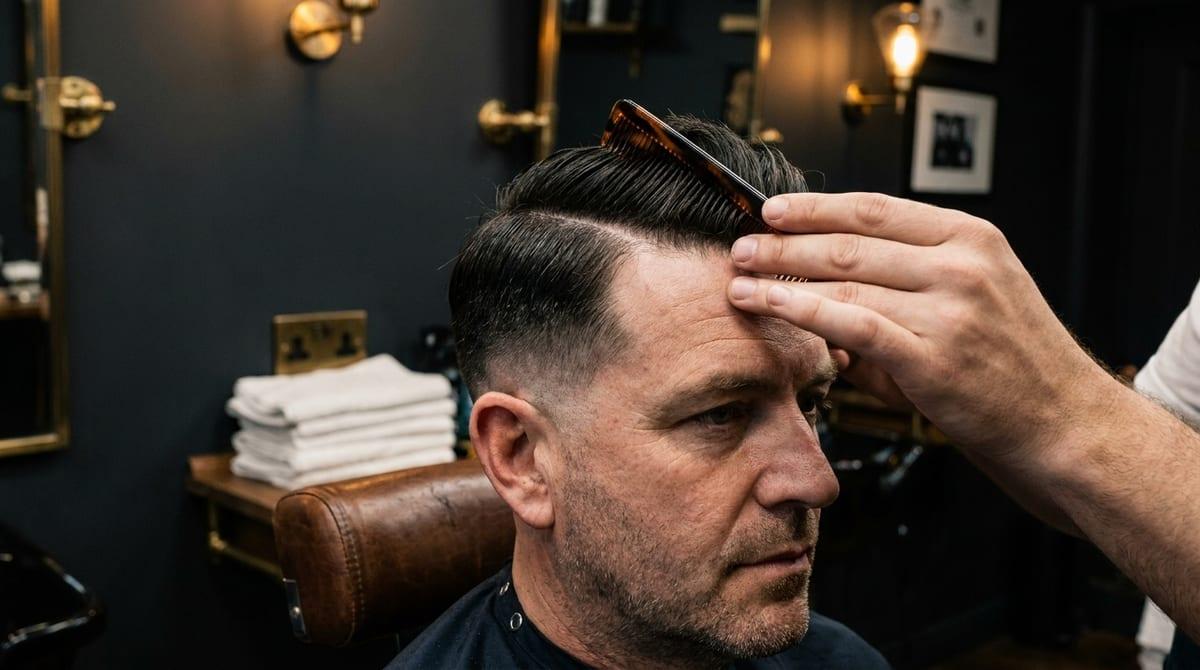
Comb Over Fade: The Modern Way to Wear It
What a comb over fade is, how much length you need on top, where the parting should sit and how to style it in two minutes without a fight.
6 min

Barbershop FAQ
How Fast Does Hair Grow, and Why It Varies
About 1cm a month, but a grade one doubles in nine days. The barber's table of how fast each cut grows out, and the real reasons yours runs quick or slow.
5 min