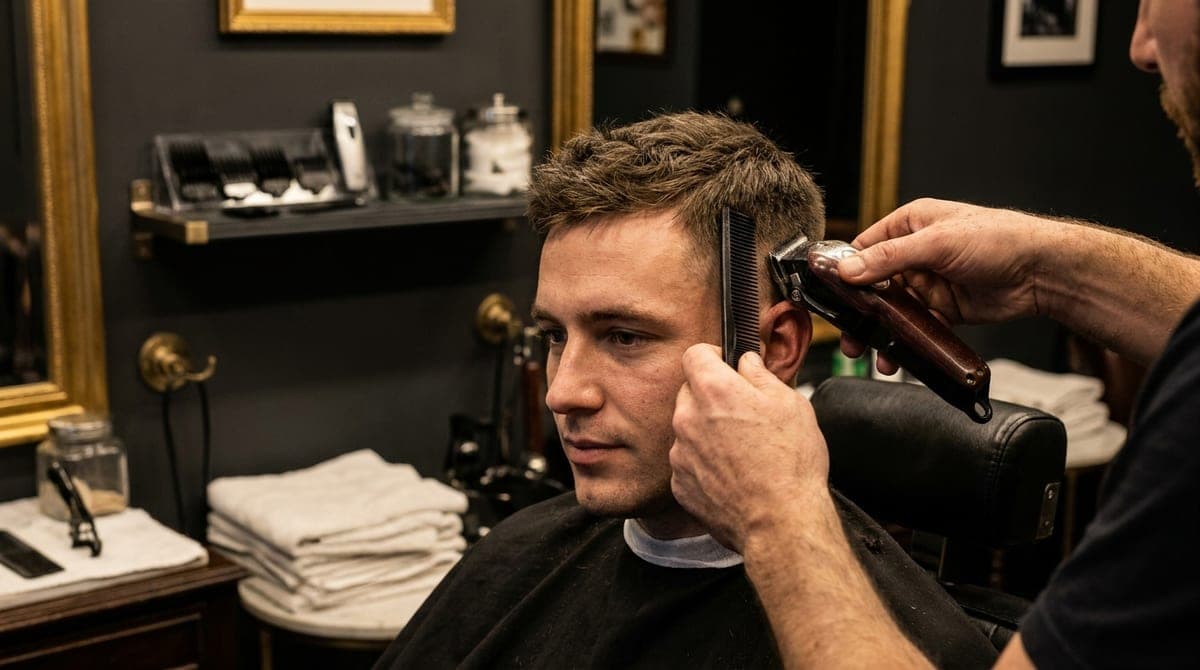
A low taper fade keeps the blend low, starting just above the ear and following the hairline round into the neck, and it never goes down to bare skin. The shortest point is a grade one or a half. That makes it the most forgiving fade we cut: quiet from the front, sharp from the side, and it grows out clean instead of scruffy. If you want a fade you only have to think about every three weeks, this is the one.
Low Taper Fade: The Complete Guide for 2026
What a low taper fade actually is, who it suits, exactly what to ask for in the chair and how often it needs tidying. From the barbers on Harrow Road.
6 min readGolden Scissors, Maida Vale, London
What a low taper fade actually is
The name is three separate decisions, so take it one word at a time.
Low is where the blend sits. It starts just above the ear and stays below the temple, tracing the hairline round the back of the head. A mid fade climbs to the temples and a high fade goes up towards the parting. Low is the quietest of the three. From straight on, most people cannot tell you have a fade at all until you turn your head.
Taper is how short it gets. The shortest point is stubble, usually a one or a half, never skin. That millimetre or two is the whole difference between this and a low skin fade, and it decides how the cut ages. We wrote the full comparison up in skin fade vs taper fade if you are weighing the two.
Fade is the blend itself. Each grade melts into the next with no steps and no visible lines, worked with clipper-over-comb where the length changes fastest.
One warning about the internet. A lot of American barber channels use "taper" to mean just the neckline and the patch around the ears, and "fade" for anything blended. In this shop, and most London shops, a low taper fade means exactly what the three words say: a full blend, kept low, finishing at stubble rather than skin.
Who it suits
Almost everyone, which is why we cut so many of them. But it earns its keep on some heads more than others.
Fine or thinning hair. Stripping the sides to skin makes a thin top look thinner by comparison. A taper keeps a shadow of density all the way down, so the whole head reads fuller. If your crown is starting to go, this is the fade we will steer you towards.
A first fade. If you have never had one and you are not sure, start here. It is the smallest possible step up from a standard short back and sides, and if you decide it is not for you, three weeks of growth and it never happened.
Strict offices. A low taper reads as smart rather than sharp. Nobody across a meeting table will clock it as a statement haircut, which for some jobs is exactly the point.
Growing your hair out. Untidy back and sides are what make growing hair look like neglect. A low taper keeps the edges deliberate while the top gets on with it.
Curly hair. Curls need weight to clump and sit properly. A low taper takes the bulk off the perimeter without touching that weight, so the curl keeps its shape instead of frizzing at the edges.
Who should think twice? Anyone after the carved, high-contrast look. A low taper will never give you the hard line between skin and hair that a skin fade does, and no amount of asking will make stubble read as bare skin. If that contrast is the point, book the skin fade and accept the fortnightly upkeep that comes with it.
What to ask for in the chair
"Low taper, down to a one, keep the weight through the sides, and square off the neckline." That is a complete brief and it takes five seconds to say.
The pieces worth deciding before you sit down:
- How short at the bottom. A one is about 3mm and is the standard. A half gives a touch more contrast without going to skin. A one-and-a-half barely reads as a fade at all, which some men want.
- The neckline. Squared looks sharpest for the first fortnight. Natural grows out with no line at all. If you usually go longer than three weeks between cuts, take natural.
- The sideburns. A low taper runs straight through where your sideburns start, so say if you want them kept. Silence in the chair means they get blended away.
- The top. Say what you want left in inches, or show a photo. The taper is the frame, not the picture.
Mention a cowlick or a double crown if you have one. It changes how tight we can take the back before the crown starts to stick up, and it is easier to plan around at the start than to fix at the end.
How it grows out, and when to come back
This is the low taper's whole argument.
Week one it is sharp. Week two it still looks cut on purpose. Week three the blend has softened, but nobody except your barber would call it grown out. Week four it has quietly become a regular short haircut, which is a perfectly respectable thing to walk around with until you book in.
A skin fade cannot do that. It peaks inside ten days and looks unfinished by week three, because bare skin grows back to stubble and blurs the bottom of the blend. The taper never had a bare-skin stage, so there is no point in its life where it looks like a mistake.
Two to three weeks is the rhythm if you want it looking freshly done. A taper fade here is £17 and takes 40 minutes, and with six chairs running, a booked slot means what it says. The price list has the rest if you want to add a beard trim while you are in.
What to wear on top
The taper does not care what happens above the weight line, which is why it pairs with nearly everything.
A textured crop with a blunt fringe sits well over it, and the pair hide a receding corner better than anything else we cut. Longer hair with a side parting works because the low blend keeps the sides from ballooning between cuts. Curls left natural on top are an easy match for the same reason. The one pairing that needs patience is a slick back, which wants three or four inches of length on top before the proportions make sense, so grow first and taper meanwhile.
If you are choosing with summer or a holiday in mind, the same logic as our summer haircuts rundown applies: the taper takes the heat off your neck without leaving your scalp bare to the sun.
Next time you are in, ask for it by the pieces rather than the name: where the blend sits, how short at the bottom, what happens to the neckline and the sideburns, and how much stays on top. That is the whole language of the cut. Or book a chair and we will work it out with your hairline in front of us instead of a photo of someone else's.
Common questions
- Is a low taper fade the same as a low fade?
- Not quite. A low fade usually means the hair goes to bare skin at the bottom. A low taper stops at stubble, a grade one or a half, so it grows out cleaner and shows less scalp.
- How often does a low taper fade need tidying?
- Every two to three weeks if you want the blend sharp. At four weeks it has quietly grown into a regular short haircut, which is the most graceful ageing of any fade we cut.
- Does a low taper fade work with curly hair?
- Very well. It takes the bulk off the edges without touching the weight the curl needs to clump and sit properly, which is why it is our default suggestion for tighter curl patterns.
- Will a low taper fade suit a receding hairline?
- Usually, because it keeps a shadow of hair all the way down instead of bare skin, so a thinning top does not get made to look thinner by contrast.
- How much does a taper fade cost at Golden Scissors?
- £17 and it takes 40 minutes. That includes the consultation at the start, where we work out where the blend should sit on your head.
Read next
Style Guide
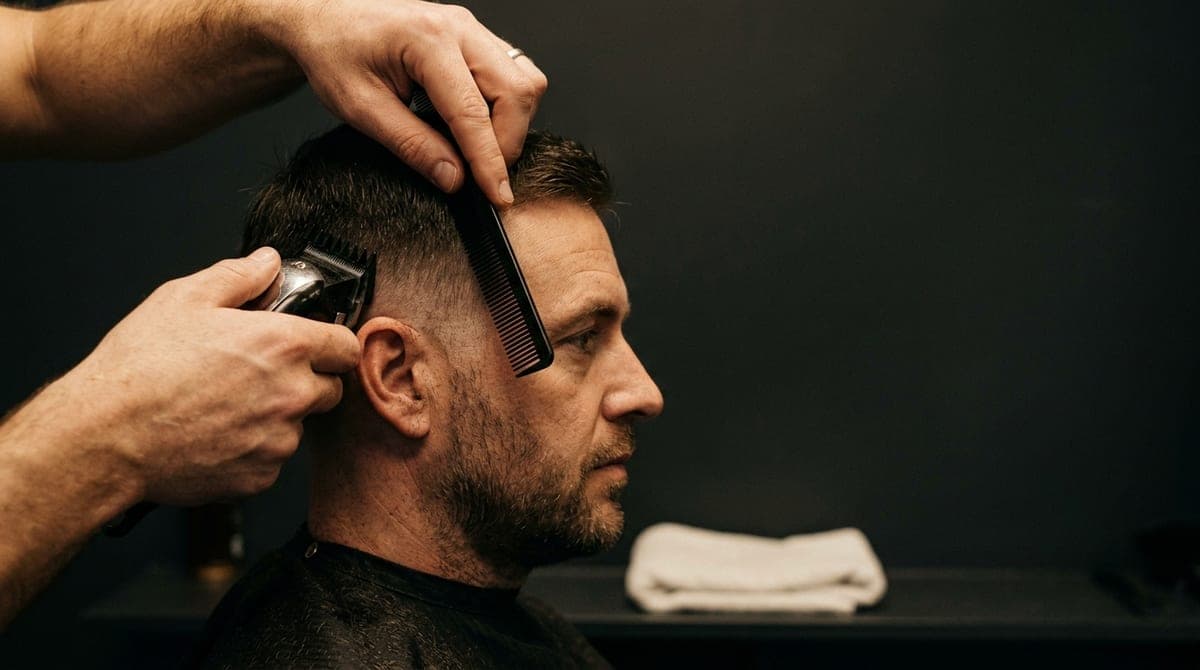
Skin Fade vs Taper Fade: The Difference
A skin fade goes to bare skin, a taper fade keeps a little length. Which one suits your hair, your head shape and how often you can get back to the chair.
5 min
Seasonal
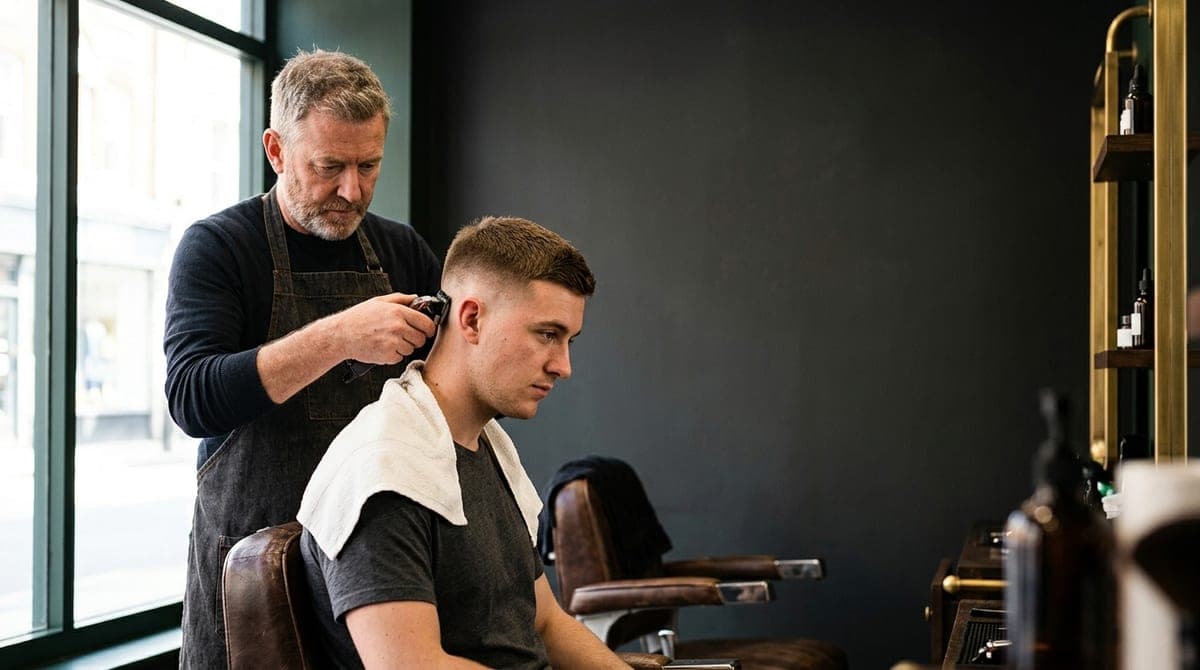
Best Summer Haircuts for Men in 2026
The cuts that actually hold up in London heat, what to ask for, what each one costs and how often it needs tidying. From the barbers on Harrow Road.
4 min
Hair Health
Stop Your Hair Going Greasy in Hot Weather
Why hair turns greasy in summer, what to change about washing and product, and the haircuts that hide it best. Straight advice from a Maida Vale barbershop.
5 min