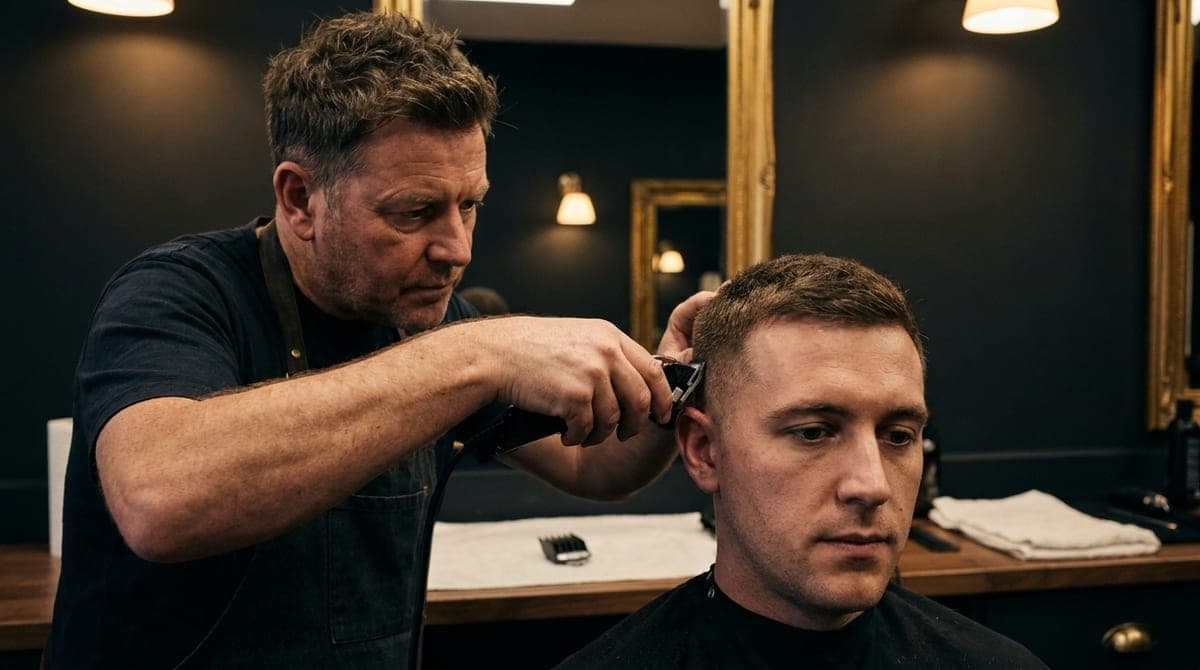
A zero fade takes the sides down to the bare clipper blade, no guard fitted, and blends up from there. That leaves under a millimetre at the bottom, which reads as a shadow rather than as skin. It sits between a taper fade and a skin fade, and it is very often the cut a man actually wanted on the day he walked in and asked for a skin fade.
Zero Fade: What It Is and Who It Suits
A zero fade stops at the bare clipper blade instead of bare skin, so it keeps a shadow at the bottom. Who it suits, and how to ask for one properly.
6 min readGolden Scissors, Maida Vale, London
Where each fade stops
Three cuts, one technique, three different answers to the same question: how short does it get at the very bottom?
| Fade | Shortest point | What you see down there |
|---|---|---|
| Taper | a grade 1 or a 0.5, so 3mm down to 1.5mm | Short hair. Still obviously hair |
| Zero | the bare blade, under 1mm | A shadow. Scalp visible through it |
| Skin | foil shaver or razor, nothing left | Bare skin |
The word doing the work is "zero", and it means the clipper with no guard on it. Not a number 0.5 guard, not the closed lever on a grade one. The blade itself, straight against the head. If you want the whole numbering system in millimetres, we wrote it out in our guide to clipper guard lengths, and the short version is that everything from a grade one upwards leaves hair you can see the colour of, while the bare blade leaves the colour of your scalp with a tint over it.
That gap between a 0.5 and the bare blade is under a millimetre. It sounds like nothing. On the side of your head it is the difference between short hair and a shadow, and it is the entire reason this cut has its own name.
What zero buys you that the other two do not
A skin fade gets its impact from contrast. Bare scalp at the bottom, density up top, and a hard visual jump between them. That is the look, and when it suits a man it really suits him.
The cost of it is the razor. Getting to true skin means a foil shaver or a straight edge over the same strip of neck and temple every two weeks, and a fair number of men cannot do that without their neck telling them about it afterwards. Ingrown hairs, razor bumps, a rash along the nape that turns up two days later. We see it constantly, and we see men give up on fades entirely because of it, which is the wrong lesson to take.
It is not the fade that irritates. It is the blade on skin.
A zero fade gets you most of the way to that contrast and never touches you with a razor. The clipper blade rides on the head, it does not cut below the surface, and skin that reacts to shaving usually has no argument with it at all. If you like the look of a skin fade and your neck does not, this is the cut, and it is the single most useful thing we can tell you about it.
There is a second group it suits, and that is anyone with something on their scalp they would rather not advertise. A skin fade shows every dip, bump, old scar and mole on the back of a head, and none of us can see the back of our own head to know what is there. Under a millimetre of shadow, most of that quietly disappears. For the full breakdown of who each one flatters, our piece on the skin fade against a taper goes through hair type and head shape properly.
How it grows out
This is where the zero earns its keep, and it is worth understanding before you choose.
Bare skin is a temporary state. On a skin fade the scalp is back to visible stubble in three or four days, and the moment there is stubble at the bottom, the contrast that made the cut worth having starts closing up. Sharp for about ten days is an honest figure, and we say the same in our post on how long a skin fade holds.
A zero fade has nothing to grow back into. It started as a shadow, so the first fortnight just makes the shadow slightly denser, and the shape of the blend stays where the barber put it. Two weeks and it is still sharp. Three and it is tidy. Past that it stops reading as a fade and starts reading as short sides, which is a perfectly respectable thing for a haircut to become and not the same as looking overgrown.
We would put it at two to three weeks between visits if you want it looking deliberate. That is a few days more than a skin fade stays sharp, and a week less than a taper.
Asking for a zero fade without getting a skin fade
Here is the practical problem. "Zero" is not standardised. Say it in one shop and you get the bare blade. Say it in another and the barber reaches for the foil shaver, because to him zero and bald have always meant the same thing. Neither of them is being careless. The word genuinely carries both meanings in the trade, and plenty of guides online will tell you they are interchangeable.
So do not rely on the word on its own. Say what you do and do not want done to you:
- "Zero at the bottom, no foil, no razor." That is the whole instruction, and it cannot be misread.
- Then place the line. Low, mid or high describes where the fade starts climbing, not how short it goes. They are two separate decisions and men mix them up constantly.
- Then the neckline. Squared off, or left to follow your natural growth. It changes how the cut looks from behind for the next month and nobody ever gets asked.
There is no zero fade on our menu, and there does not need to be. It is the same clipper work as the two fades either side of it, both of which are £17, so book a chair under whichever name you like and tell us in the shop. Six chairs run at once here, so the slot you book is the slot you get.
One last thing, and it is worth doing before you get out of the chair. Ask for the mirror and turn your head slowly under the light. What you want to see along the bottom is one continuous shadow, with no band and no step where the blade stopped and the guard took over. A zero fade lives or dies on that first inch, because there is so little hair down there to hide a bad join. If you can see a line, say so while you are still sitting down. It takes a minute to melt it out, and none of us mind being asked.
Common questions
- Is a zero fade the same as a skin fade?
- No. A zero fade bottoms out at the bare clipper blade and leaves under a millimetre of hair, so you see a shadow. A skin fade goes further, to actual bare skin, with a foil shaver or a straight razor.
- How often does a zero fade need cutting?
- Two to three weeks keeps it sharp. It holds better than a skin fade because it never had bare skin to grow back into, but the bottom is still short enough that a fortnight shows.
- How much is a zero fade at Golden Scissors?
- It is not a separate line on our menu. Both our fades are £17, the skin fade in 30 minutes and the taper in 40, so book either one and say you want zero at the bottom rather than skin.
- Does a zero fade work on thinning hair?
- Better than a skin fade does. Bare skin next to a thin top exaggerates the difference, while a shadow at the bottom keeps some tone down there and the top looks denser by comparison.
- Can I keep length on top with a zero fade?
- Yes, and most men do. The fade only decides what happens on the sides and back. Anything from a crop to four inches of length sits over it.
Read next
Style Guide
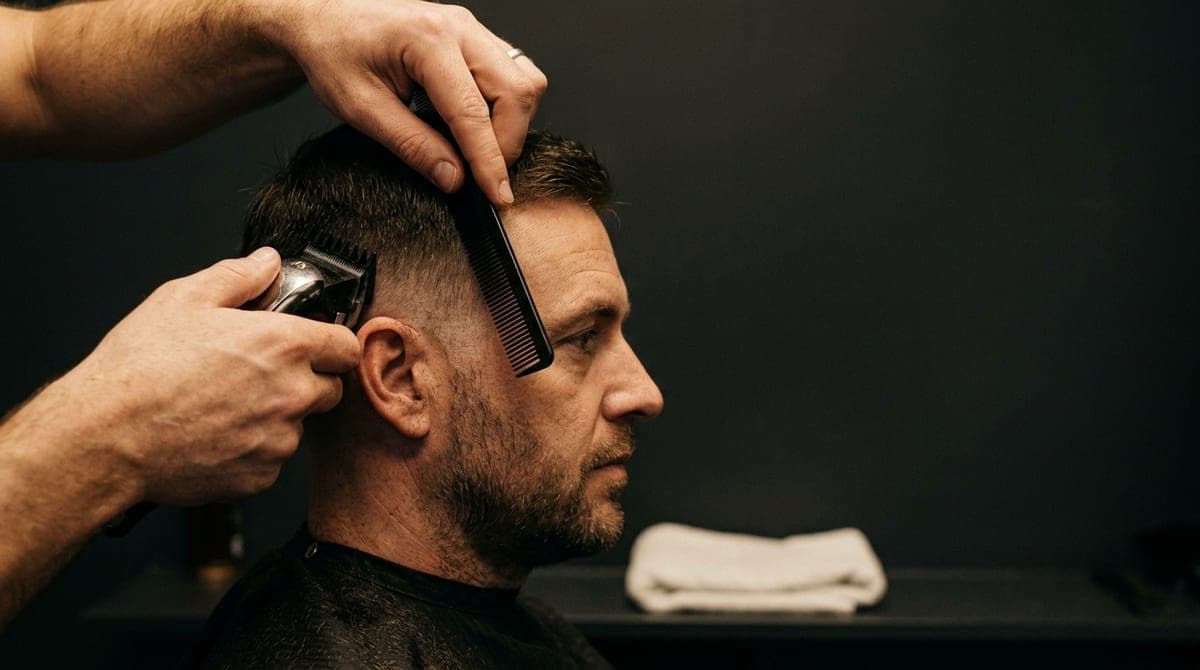
Skin Fade vs Taper Fade: The Difference
A skin fade goes to bare skin, a taper fade keeps a little length. Which one suits your hair, your head shape and how often you can get back to the chair.
5 min
Barbershop FAQ
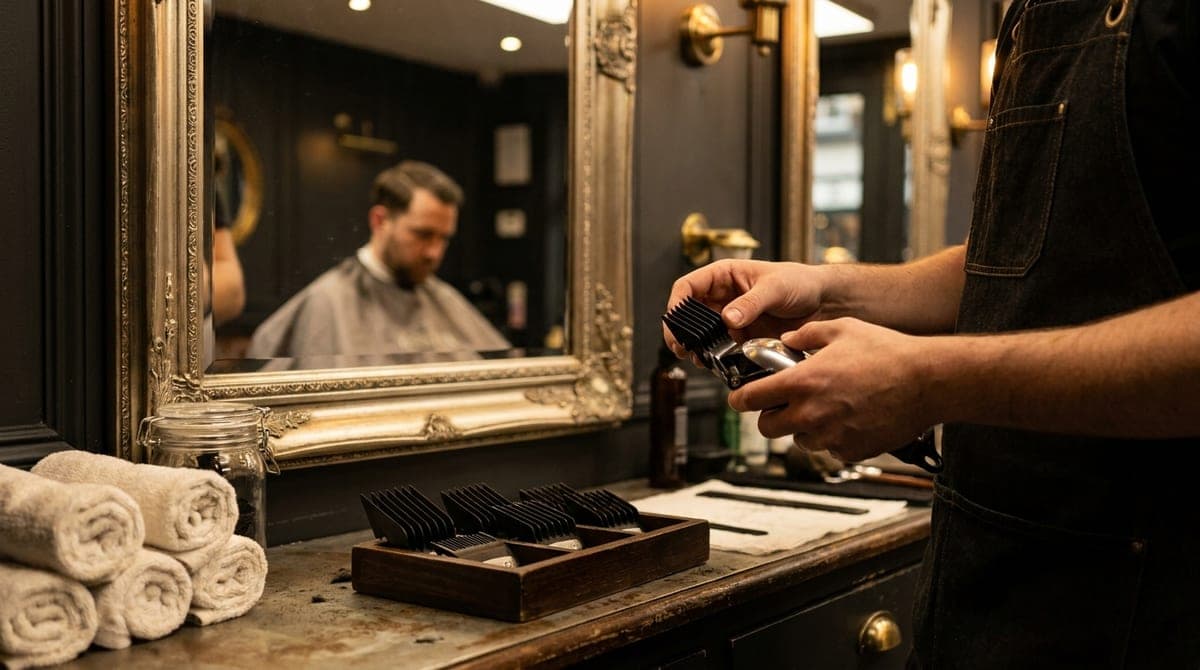
Clipper Guard Lengths in mm, From 0.5 to 8
Every clipper guard from 0.5 to 8 in mm and inches, the 1.5 included, plus what each one looks like on your sides and how to ask for it in the chair.
6 min
Barbershop FAQ
How Long Does a Skin Fade Last?
How long does a skin fade last? Sharp for about ten days, tidy for three weeks. What decides your number, and how to buy yourself an extra week.
6 min