Beard dandruff is the skin under your beard shedding faster than it clears, and the beard holding on to the flakes. To get rid of it, lift the loose flakes out with a brush before you wash, wash the skin rather than the hair, leave the wash on long enough to work, and rinse until nothing is left behind. Before you do any of that, check it really is dandruff. A lot of what we comb out of beards in the chair is dried product.
How to Get Rid of Beard Dandruff
Beard dandruff, or just old balm and wash dried on the skin? How to tell, how to wash flakes out properly, and why oil can make the greasy kind worse.
6 min readGolden Scissors, Maida Vale, London
Is it beard dandruff or something else?
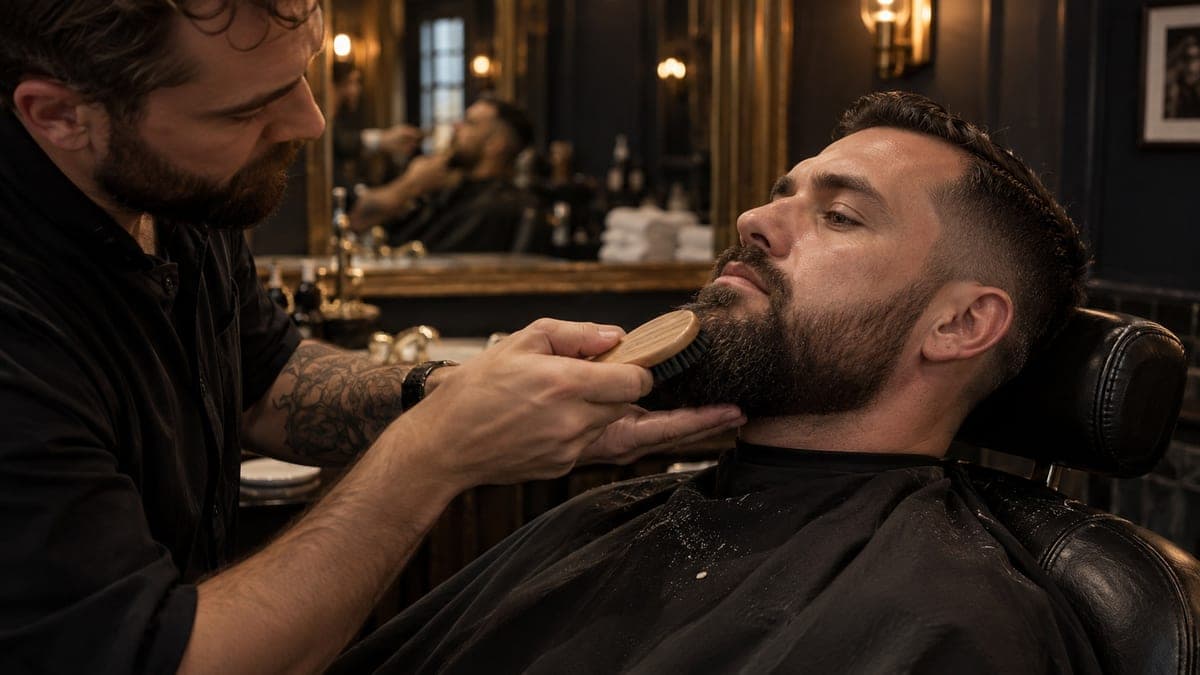
Stand by a window, run a fine comb upwards from the neck, and look at what comes away on the teeth and what stays on the skin. Four things turn up there, and only two of them are dandruff.
Dried product. Balm, wax and some beard washes leave a film that dries into pale, slightly waxy crumbs near the root. It sits on the hair rather than lifting off the skin, and it gets worse the more you use. If the flakes appeared around the time you started a new balm, or you style the beard every morning and wash it twice a week, suspect the tin first. A week of washing properly without it will tell you.
A beard that is only a few weeks old. Skin that used to get shaved every morning was having its dead layer scraped off daily. Grow a beard and that stops, so for the first month or so the dead skin has nowhere to go. It usually settles once you start brushing it out. Our beard growing guide covers the rest of that stage.
Fine white dust, with the skin tight and dull underneath. Dry skin. This is the version that turns up when the heating goes on, and the fix is gentler washing and moisture on the skin. We went through it step by step in our post on autumn beard itch, and everything in it applies to beards with flakes too.
Bigger, yellowish flakes that cling, with pink skin underneath. The oily kind, the same thing that happens on the scalp. It often turns up in more than one place at once: the chin, the sides of the nose, the eyebrows. This is the one people mean when they say beard dandruff, and it needs a different approach from dry skin. Our piece on telling dandruff from a dry scalp explains the difference in more detail.
How to wash the flakes out
Most men with flakes are washing the beard. They are just washing the hair and not the skin, and rinsing for about four seconds.
- Brush it dry first. Before the shower, a firm brush or a wide comb from the neck upwards, then back down. This lifts the loose flakes so the wash can reach the skin instead of foaming on top of them.
- Wet it with warm water, not hot. Hot water strips the skin and the flaking comes back faster.
- Work the wash in with your fingertips, against the grain. Pads, not nails. You are trying to reach the skin along the jaw and under the chin, which is where the hair is thickest and the flakes collect.
- Leave it on. If it is an anti-dandruff shampoo, the label will tell you how long. Most need a few minutes to do anything, and on a beard they rarely get a few seconds.
- Rinse for longer than feels necessary. Tilt your head back and let the water run up through the beard from underneath. Any wash that stays trapped near the skin turns into a crust of its own by lunchtime, and you are back where you started.
- Press it dry, then comb it through. A towel dragged back and forth scuffs the skin you just cleaned. A hairdryer is fine on the cool setting.
Every day is too often for most beards. Two or three proper washes a week, with water in between, is where most people settle.
Which wash? Plenty of men use the same anti-dandruff shampoo on the beard that they use on the scalp, and for the oily kind that can be the right call. The skin on your face is not the skin on your head, though, and some of those shampoos are strong. Ask a pharmacist which suits your face before you start using one on it every other day.
When oil makes it worse
Beard oil is the first thing most people reach for, and for dry flakes it helps. For the yellow, greasy kind it can do the opposite, because that sort of flaking feeds on oil that is already there. A beard that is flaking, shiny and slightly sticky does not need more of it.
Unsure which one it is? Stop the oil and the balm for a week and just wash as above. If the flakes get better, the product was part of the problem. If the skin goes tight and dusty, it was dry all along and the oil can go back on, onto the skin this time rather than the ends. Our oil or balm comparison has more on which to buy.
Does shaving it off fix it?
No. The skin that was flaking is still there, it just has nothing to hold the flakes, so you stop seeing them. Plenty of men find the patch under the chin goes red and sore from the razor instead. Then the beard grows back, the flaking picks up where it left off, and you have lost the beard for nothing.
If you were thinking of taking it off anyway, fine. Just do not do it as a cure.
Where the barber can help
A dense beard, especially a dark one, hides flakes against the skin and then drops them on your collar the moment you scratch. They show worst on black, which is why so many men notice beard dandruff for the first time in October, when the dark coats come out.
Length is part of that. Under the chin and down the throat is where the hair is thickest and where a wash struggles to get in and out. Taking that area down a grade, and thinning the underneath so air reaches the skin, often does more than a new product. We would much rather do that than see someone shave off a good beard over a few flakes.
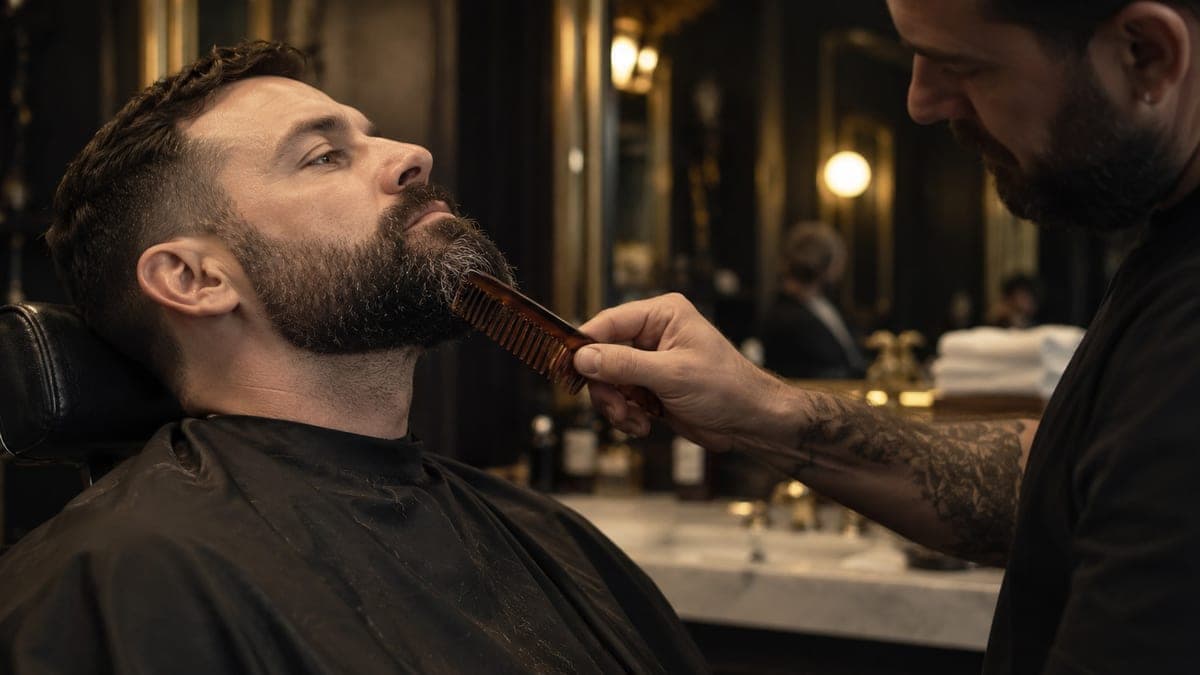
On Harrow Road the Beard Trim costs £11 for 15 minutes, and the booking page knocks £2 off it if you book a haircut alongside. Part of every trim is combing the beard up and looking at the skin. If we see flaking we will tell you, and we will leave the scented products off. Mention any sore or red patches when you sit down so we can take the neckline with the trimmer rather than the razor.
When to stop handling it yourself
Give the washing a fortnight. If the flakes are no better, or the skin under them is red and spreading, weeping, cracking, or sore enough to keep you awake, show it to a pharmacist, and if they cannot help, your GP. Same if the eyebrows and the sides of your nose are flaking along with the beard. That is skin, not hair, and it is outside what any barber should be advising on.
If you want to start with the easy part this week, put the balm away for seven days, brush the beard before every shower and leave the wash on longer than you normally would. If the beard needs taking in under the chin as well, you can book a beard trim online and add it to a haircut for the lower price.
Read next
Beard & Shave
Beard Itch in Autumn and How to Stop It
Why beard itch comes back every October, from the heating to a wool scarf, and the small changes that stop it before you start scratching at your jaw.
6 min
Hair Health
Dandruff vs Dry Scalp: How to Tell
Dandruff vs dry scalp: what the flakes look like in each case, the wash test that separates them, what helps for each, and when to see a pharmacist.
6 min
Products
Beard Oil vs Beard Balm: The Difference
Beard oil vs beard balm explained by the barbers on Harrow Road: what each one actually does, and which one your beard needs right now.
4 min