The best hair clippers for home use are not the ones on a barber's station. They are a sturdy mid-priced kit with a taper lever, a guard set that includes the half sizes, and guards that clip on firmly, bought alongside a small trimmer for the neckline. Most home kits sit under £50 and professional clippers often pass £100, but for one man cutting his own head every few weeks, the cheaper kit with the right features does the job. What matters is matching the clipper to the job you actually want it for.
The Best Hair Clippers for Home Use
What makes the best hair clippers for home use, from a barber's chair: the lever, the half guards, corded or cordless, and the one job no clipper fixes.
6 min readGolden Scissors, Maida Vale, London
Decide the job before the clipper
Men buy clippers for four different reasons, and they need different things.
One guard all over. If you keep a buzz cut, nearly any decent clipper will do it. You run one guard over the whole head, against the grain, and the only real demands are that the motor does not bog down in thick hair and the guard does not shift. This is the easiest haircut there is to keep at home.
Holding the sides short between cuts. You get a proper cut here every five or six weeks and want the sides kept tidy in the gap. This is where the lever and the half guards earn their money, because you are trying to match a length a barber set, not choose a new one.
The neckline and around the ears. A full-size clipper is clumsy here. You want a trimmer, which is a narrower tool with a finer blade, and we will come to why that is a separate purchase.
A fade on your own head. No clipper at any price solves this one. More on that further down.
Most men are in the first two groups. Be honest about which one you are before you read a single review.
What to look for in the best hair clippers for home use
Retail reviews mostly rank clippers by price and battery time. Those matter, but they are not what decides whether a home haircut goes well. From the chair, these are the things we would check on the box.
A taper lever. It is the small lever on the side of the clipper body. Moving it shifts the blades and changes how close they cut, by roughly half a grade on most clippers. With a guard on, it gets you the in-between lengths. With no guard, it is the difference between the closest shadow the blade can leave and a slightly softer one. Bare skin is not a clipper setting at all; that takes a foil shaver or a razor. Not every budget kit has one, and the same model name can be sold with and without it, so read the box rather than the brand.
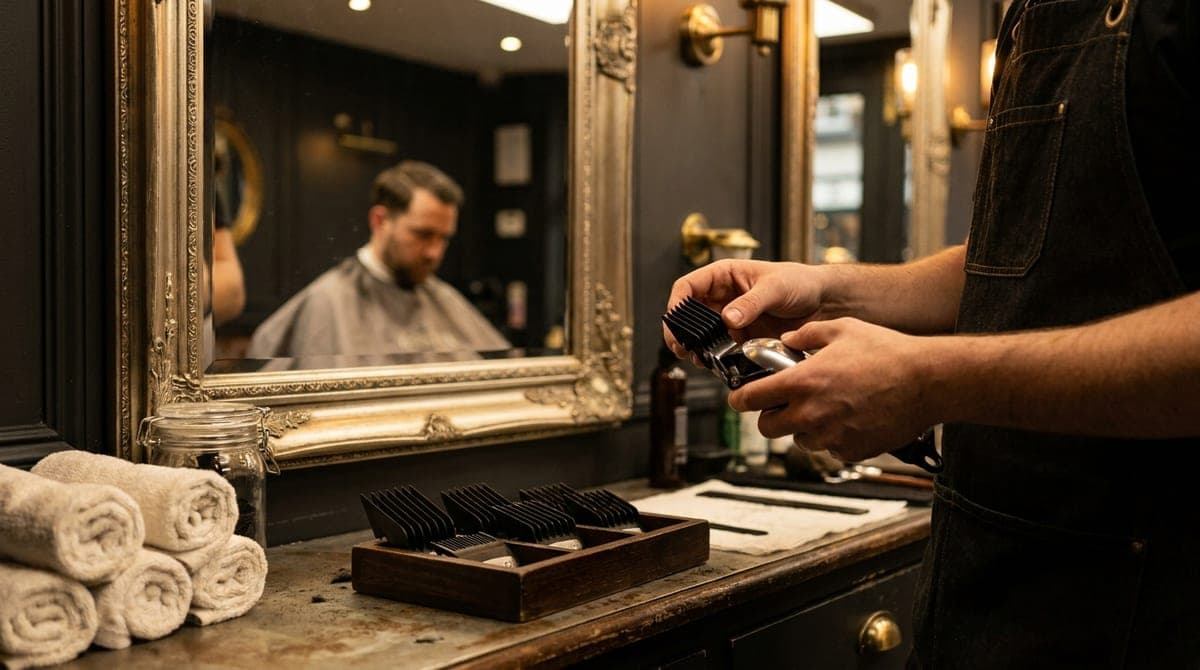
The guard list, not the guard count. "Ten guards" tells you nothing. Look for which lengths they are. A set that runs 1, 2, 3, 4, 6 and 8 skips the 1.5, which is the size that sits between a 1 that is too stark and a 2 that is too fuzzy. If you know the number you get cut to here, make sure that exact number is in the box. Our chart of every guard length in millimetres will tell you what you are looking at.
Guards that lock on. This is the one nobody writes about. On a cheap guard, the plastic can flex or ride up as you push it through hair, and a guard that lifts off mid-pass leaves a bald stripe that takes three weeks to grow back. When you can handle a kit in a shop, push the guard on and try to wiggle it. If it moves, leave it.
Corded or cordless. Cordless is easier to use behind your own head, where the cable gets in the way. The catch is the battery. Check the running time against the charge time on the box: an hour of cutting is plenty for a buzz cut, but a long recharge leaves you stuck if you forget to plug it in. A clipper running down on a weak battery also slows and starts to pull rather than cut. If you can, buy one that will also run on the mains.
Weight in your hand. You will be holding it up at awkward angles to the back of your own head. Lighter is better for that, even if a heavier clipper feels more serious in the shop.
A clipper and a trimmer are two tools
A clipper has a wide blade made for taking length off a lot of hair at once. A trimmer has a narrow blade that cuts very close, made for edges: the neckline, round the ears, sideburns, the cheek line of a beard.
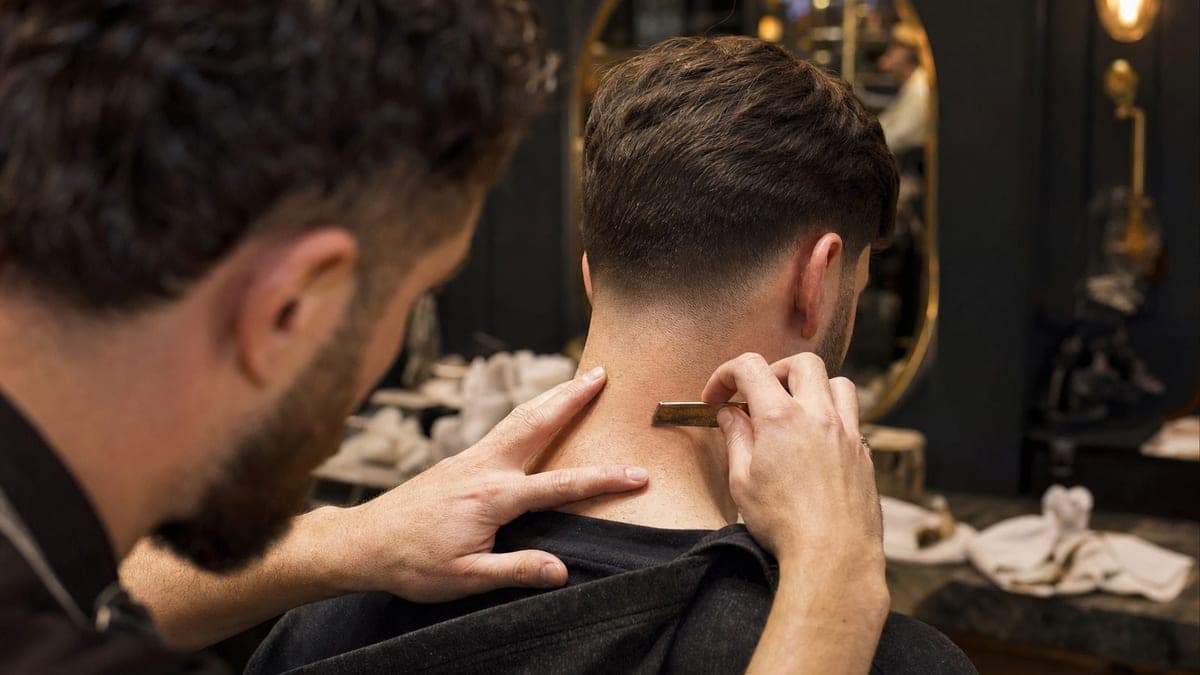
Trying to do the neckline with a full-size clipper and no guard is how men end up with the back taken too high. The blade is too wide to follow the curve of the nape and you cannot see what it is doing. A trimmer is small enough to work in short strokes downwards from the line, which is exactly the method in our guide to tidying your neckline at home.
The reverse also applies. A beard trimmer is not a hair clipper. It will buzz a head, slowly, and the guards on most beard trimmers do not cover the lengths you want on your sides.
So the kit for most men is one clipper and one small trimmer. If you only buy one, buy the clipper, and keep your trimmer use to the beard.
Keep the blade cutting
A clipper that pulls is usually a clipper that needs cleaning, not a clipper that needs replacing.
- Brush the hair out of the blade after every use. The little brush that comes in the box is there for this.
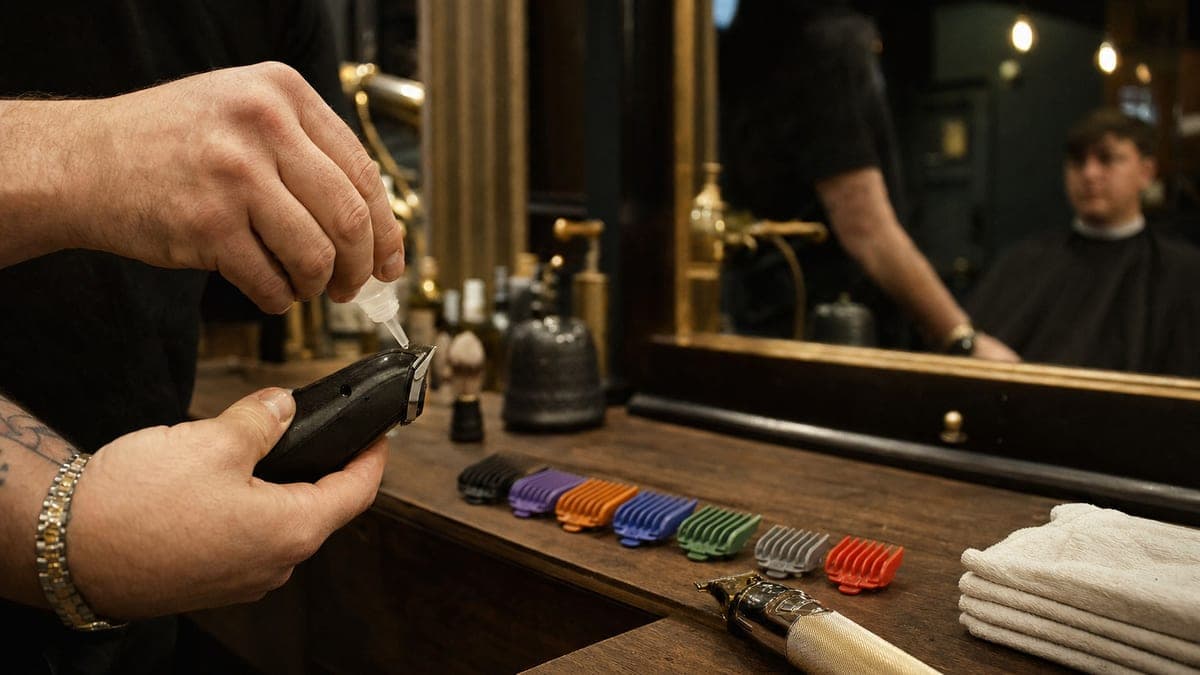
- Put a drop of clipper oil across the teeth before each cut, run it for a few seconds, and wipe off the excess. Most kits come with a small bottle.
- Do not rinse it under the tap unless the manual says the blade is washable.
- Wash the guards in warm soapy water now and then, and dry them before they go back in the box.
A blade looked after like that stays sharp for a long time at home, because one man's head every few weeks is very light work.
What home clippers will not do
A fade on your own head is the honest limit. A fade is a run of lengths blended into each other, from short at the bottom to longer above, and the blend is made by small movements of the lever and the clipper angle that you have to watch as you go. At the back of your own head, you cannot watch. The usual result is a hard step around the head where one guard meets the next, and the fix for a step is to take everything down to the shorter length.
The same goes for a scissor cut on top. Clippers will shorten it. They will not shape it.
Then there is the arithmetic. If all you want is one guard all over, our Crew Cut is exactly that, £10 and twenty minutes, and the right buzz grade is the one decision that matters. A home kit pays for itself after a few of those, and plenty of men are right to buy one. But if what you actually want is a fade, a taper or anything with shape on top, the clipper in the bathroom is for keeping it tidy between visits, not replacing them.
The best way to use one is to let a barber set the cut first. Sit in one of our six chairs, ask what guard went on your sides and whether the lever was open, and write it down. Then book a chair when the shape needs doing again, and use the clippers at home to hold it in between.
Read next
Barbershop FAQ
Clipper Guard Lengths in mm, From 0.5 to 8
Every clipper guard from 0.5 to 8 in mm and inches, the 1.5 included, plus what each one looks like on your sides and how to ask for it in the chair.
6 min
How To
How to Shape Neckline at Home: Emergency Fix
How to shape neckline hair at home when you cannot get to a barber: what to trim, what to leave alone and how to avoid the ledge. From Harrow Road.
5 min
Style Guide
Buzz Cut Lengths: What Each Grade Looks Like
Every buzz cut grade from 0.5 to 6 in mm and what it looks like on the head, a one against a two, the longer grade 4 and 5 buzz, and how to pick yours.
8 min