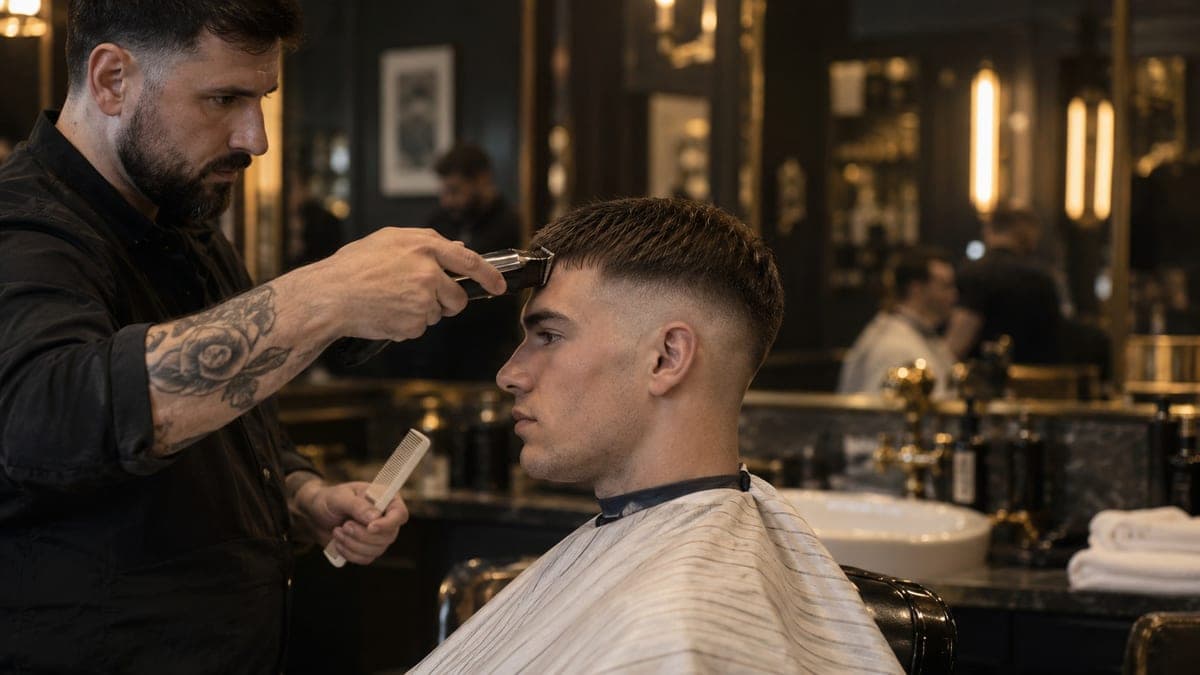
An Edgar cut is a high fade, usually taken to skin, with a short textured top brought forward into a fringe that is cut dead straight across the forehead, often with trimmers so the edge is as hard as a line-up. It suits thick hair, straight or wavy, on a full hairline. It does not suit receding temples, fine hair or a strong cowlick at the front. And that hard horizontal line is exactly why people either love it or can't look at it.
Who Suits an Edgar Cut, and Who It Doesn't
An Edgar cut is a high fade under a fringe lined dead straight. Which hair holds that line, which fights it, and the fortnightly upkeep nobody mentions.
6 min readGolden Scissors, Maida Vale, London
What makes it an Edgar and not a crop
Plenty of cuts put a fringe on the forehead. Three things together make an Edgar.
The fade goes high. Not a low taper round the ears. The sides are taken short to well above the temple, often to skin at the bottom, leaving very little hair between the fade and the top.
The top stays short and comes forward. An inch or so, sometimes more if the hair is curly, combed or pushed towards the face so everything ends at the front.
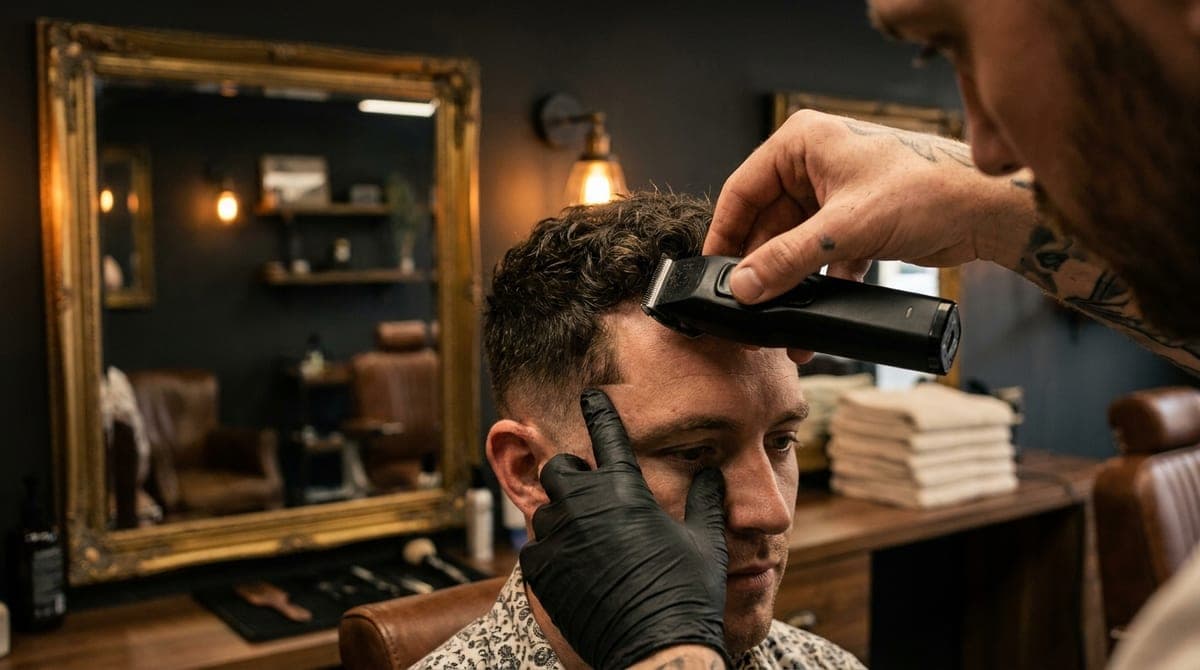
The fringe is lined, not cut soft. This is the part that matters. On a French crop the fringe is point cut so the ends break up and sit loosely. On an Edgar the line is drawn with the edge of the trimmer, straight across, with the corners squared where it meets the fade. It is the same tool and the same hand we use for a line-up on the hairline, just moved an inch or two down the forehead.
That one difference changes everything else about the cut: who it works on, how it grows, and why it splits a room.
Why the Edgar cut divides opinion
Mostly because of the geometry. A straight horizontal line across the forehead with almost nothing at the sides is the outline of a bowl cut. Some look at an Edgar and see something sharp and deliberate. Anyone who sat through a bowl cut as a boy tends to see their school photo instead.
There is a cultural story too. The cut first caught on with young Latino men in Texas and the other southwestern border states, spread through TikTok and Instagram, and picked up a reputation along the way that it did not entirely ask for. One restaurant in San Antonio banned it. In August 2025 El Salvador's education ministry banned it, along with mohawks, from the country's public schools. A good deal of the argument is about who wears it rather than the haircut itself.
We have no figures on how many men in W9 want one, and we are not going to make some up. The useful question is what the line does on your particular head.
Hair that holds the line, and hair that fights it
| Your hair | How an Edgar behaves | What we would do |
|---|---|---|
| Thick and straight | The line sits flat and stays crisp. The easiest head to give an Edgar | Cut it as it is |
| Thick and wavy or curly | Works well, with more volume on top | Line the fringe dry, because curls pull up as they dry and a line cut wet ends up higher than you wanted |
| Fine or thin | A hard edge shows scalp through it, and the high fade makes the top look thinner still | Soften the fringe, or take the sides to a taper instead of skin |
| Receding at the temples | The straight line runs across the forehead and stops where the hair stops, so it points at the gap | A French crop with a heavier, softer fringe does the opposite job |
| Cowlick at the front | The line splits or lifts within days of the cut | Leave a little more weight at the front so it lies down, and accept a less severe line |
| Low hairline, short forehead | The fringe has nowhere to sit and the face looks compressed | Keep the fringe very short, or skip the line altogether |
The receding row is the one we have the most conversations about. Anything that puts a hard edge near the temples makes them more noticeable, which is the whole argument in our post on haircuts for a receding hairline. An Edgar puts the hardest edge on the head right there. If your corners have started to go back, we will say so before the trimmer comes out.
How the line actually gets cut
Worth knowing, because it explains what can and cannot be fixed.
- The top is cut to length first and texturised, so it falls forward without being forced.
- Everything is combed straight down onto the forehead, dry. Curly hair is never lined wet.
- We set the height of the line by eye against your brows and the corners of your eyes, not with a guard.
- The trimmer goes across flat to make the line, then the corners are squared where the fringe meets the fade.
- The fade is blended up to meet those corners so there is no gap of longer hair at the temple.
Step 3 decides whether you like it in the mirror. A line can always go up a few millimetres. It can never come back down. So if you are unsure, ask for it lower and let us raise it, rather than the other way round.
Saying it so you get an Edgar
The name will not always do the work, especially in a British shop. Describe the three parts instead:
"High skin fade on the sides, about an inch on top pushed forward, and the fringe lined straight across with the trimmer, about here." Then put a fingertip on your forehead at the height you have in mind.
If you want it less severe, swap "high skin fade" for "high taper", and say whether you want the corners squared or rounded. Rounded corners take some of the bowl out of it.
What it costs you in time
This is the honest bit. A lined fringe is sharpest for about a week. By the second week the edge has blurred and the skin at the bottom of the fade has gone to stubble. By week three you have a slightly untidy crop, which is fine, but it is no longer an Edgar.
So the cut really asks for a chair every two weeks. Booked as a skin fade here, that is £17 for 30 minutes each time. If you know you will not manage fortnightly, the taper version (a taper fade, also £17) holds noticeably longer, and you lose very little of the look.
The good news is the way out. Stop lining the fringe, let it grow a few weeks, and ask for it point cut instead of trimmed. What you are left with is a French crop, which is a far gentler cut to live with, and nobody will be able to tell you ever had the line. If you want to try the Edgar knowing that exit is there, book a chair and bring a photo of the line height you are after.
Common questions
- Is an Edgar the same as a Caesar cut?
- Same family, different finish. A Caesar keeps the sides fairly full and the fringe scissor cut. An Edgar takes the sides much higher and much shorter, and the fringe gets a clipper edge as hard as a line-up.
- Why is it called an Edgar?
- Nobody knows for certain. It is often put down to the baseball player Edgar Martínez, but that story has never been backed up. It goes by other names as well, including the cuh in the Rio Grande Valley of Texas.
- Can I get the line without the high fade?
- Yes, and on a lot of heads it looks better. Ask for a taper on the sides with the fringe lined straight. You keep the front of the Edgar and lose the part that needs seeing to every fortnight.
Read next
Style Guide
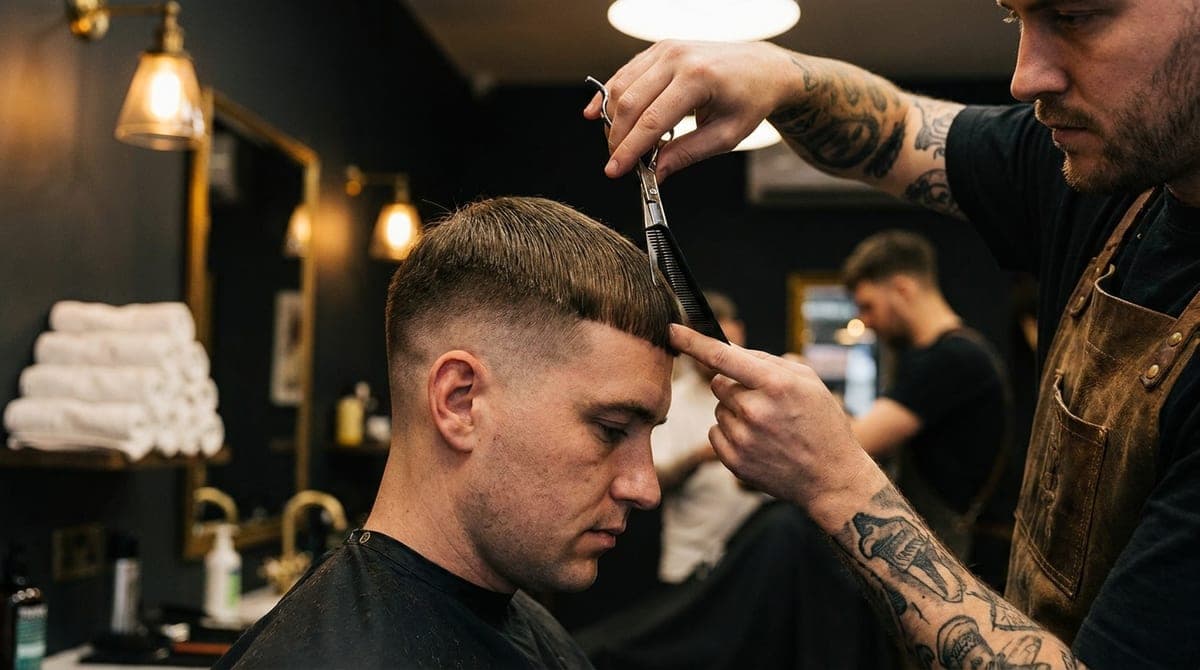
What Is a French Crop Haircut?
What a French crop haircut is, whose hairline it rescues, what to ask for in the chair, and how long it holds before it needs doing again.
6 min
Style Guide
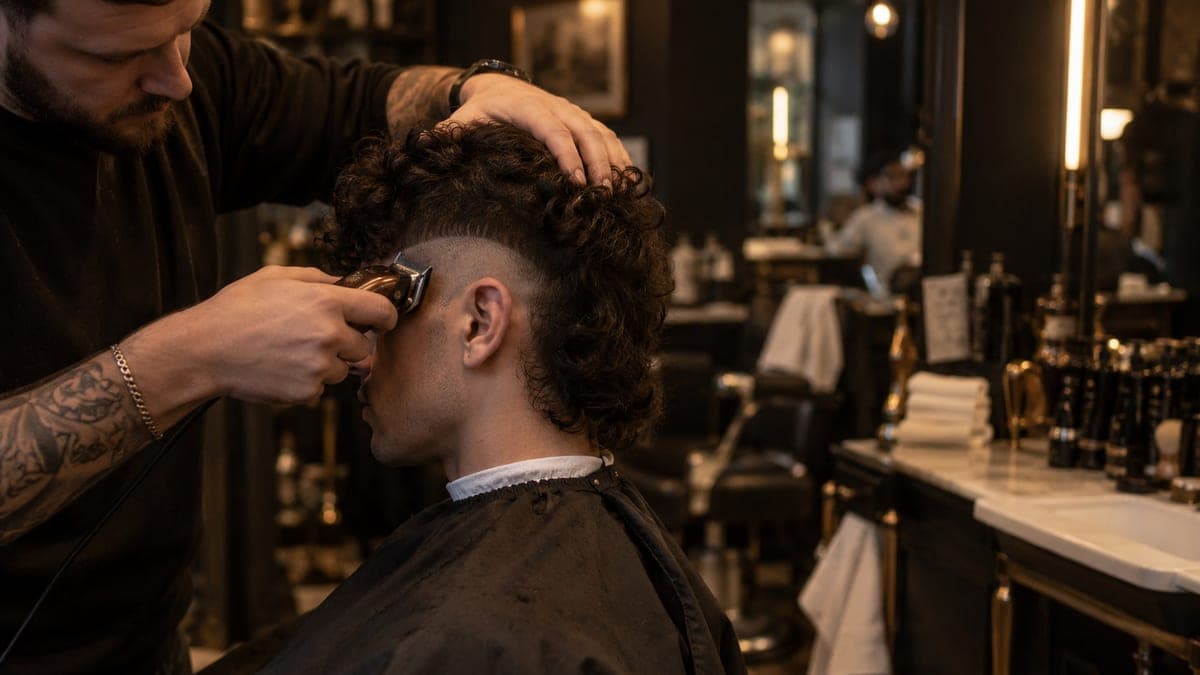
Burst Fade: The Cut Behind the Modern Mohawk
A burst fade curves round the ear and leaves the back long, which is why it sits under the modern mohawk. Who it suits and how to book one.
6 min
Style Guide
What Is a Line Up Haircut? Edges Explained
What a line up haircut is, how it differs from an edge up or a shape up, who it suits and what to ask for. From the barbers on Harrow Road.
6 min