Hair wax in cold weather stops working for a simple reason: wax is built from beeswax or a synthetic version of it, and it stiffens as the temperature drops. A tub that spreads like soft butter in July comes out of a cold bathroom in November as a hard lump. It does not warm up properly in cold hands, so it goes on in clumps, and most men respond by using more. That, not the weather itself, is why the style collapses by lunchtime.
Why Hair Wax Stops Working in Cold Weather
Hair wax in cold weather goes hard in the tin, clumps on the way in and slides by lunch. What is going wrong at each step, and the small fixes that work.
5 min readGolden Scissors, Maida Vale, London

The good news is that almost none of this needs a new product. It needs the wax to be warm before it touches your hair, and it needs to go onto hair that is properly dry.
Hair wax in cold weather: what actually changes
Three things go wrong, usually in this order.
The tub is too cold. Bathrooms in old London flats are often the coldest room in the place, and a tin that lives on the windowsill or in a coat pocket overnight is colder still. Cold wax does not just feel harder. It refuses to break down into a thin film, so instead of a light coat across every strand you get a few heavy smears in the places your fingers happened to land, usually the front.
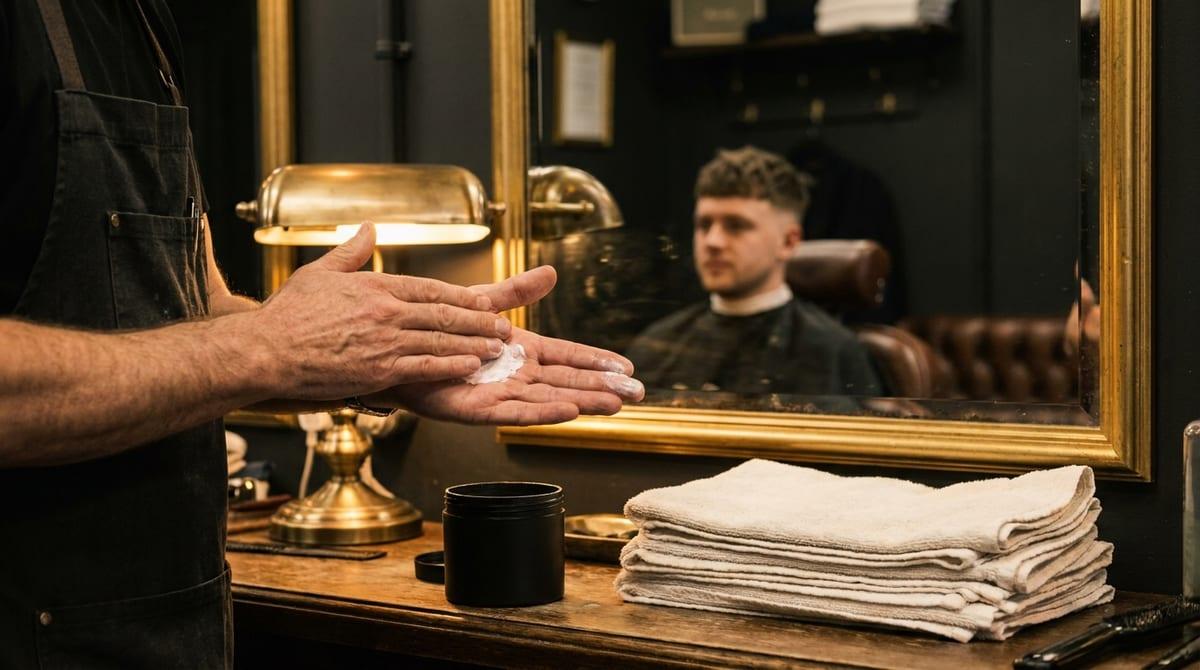
Your hands are too cold to fix it. The whole method relies on rubbing a small amount between your palms until it is a thin, clear film. With warm hands that takes ten seconds. With hands that have just been under a cold tap, or have come in from scraping the car, it can take a minute, and nobody waits a minute. So the wax goes in half warmed.
The hair is still damp. Mornings are darker and colder, hair takes longer to dry, and men rush it. Wax on damp hair slides. It sits on the water rather than the strand, and once the water has gone, so has most of the hold. If you then walk out into drizzle, the hair takes on more water and drops further.
Put those together and you have hair with too much product at the front, almost none at the back, and a set that never really took. It looks fine in the mirror at 7.30 and gives up somewhere around the bus stop.
The fixes, in the order you do them
- Move the tub. Keep it in the bedroom or a kitchen drawer, anywhere that is heated overnight. If it is already rock hard, stand the closed tub in a mug of warm tap water for five minutes. Not boiling water, and not the microwave.
- Dry your hair fully. Towel it, then finish with a dryer on medium heat until the roots feel dry, not just the ends. If you only fix one thing, fix this one.
- Warm your hands first. Run them under warm water and dry them properly, or hold them round your tea for a minute. Then take a pea-sized amount for a short cut.
- Rub until it disappears. Palms, then fingers, until the wax is a thin sheen and there are no visible lumps. If you can still see a lump, it will land in your hair as a lump.
- Back and sides first, front last. Start at the crown and the sides and work towards the hairline, so the front gets what is left rather than the whole first scoop.
- Leave it a few minutes before the hat goes on. Wax needs a moment to cool and set in the shape you gave it. Pull a beanie straight over fresh, soft wax and you have styled your hair into the inside of the hat.
None of that takes longer than the way you do it now, once it is a habit. Most of it is just the order.
Cold outside, hot inside
London winter is not one temperature. It is a cold walk, a hot Tube carriage or a heated office, then a cold walk again. Wax softens in the warm and stiffens in the cold, so a style that set on the street can start to drop in a crowded carriage and set again, slightly flatter, once you are back outside.
You cannot stop that, but you can make it matter less. A thin, even coat moves as one piece and tends to come back with a quick push of damp fingers. A thick clump at the front softens, slides forward and drags the fringe with it. Less product, spread properly, survives the change better than more product ever will.
If the hat is the bigger problem than the heating, we have covered getting hair back up after a beanie in a separate two-minute routine, and the crackle you get pulling a hat off on a dry day is a different problem again, with its own causes, in our piece on static.
When it really is the wrong product
Sometimes the wax is the issue. Signs it is:
- It is still hard to spread after you have warmed both the tub and your hands
- It leaves your hair stiff and crunchy, rather than holding it in pieces
- It needs two shampoos to get out, and by midweek your hair feels coated
A firm wax that only behaves above room temperature is a summer product. In winter a softer cream wax or a paste gives you similar hold with much less fight, and it washes out more easily too. If you are not sure what you have, the cold tap test in our clay, pomade and wax comparison tells you in ten seconds whether it is oil-based or water-based, and that comparison also covers which finish suits which cut.
And sometimes it is neither the weather nor the wax. If the top has grown out long and heavy since your last cut, no product is going to keep it standing on a wet Tuesday. Weight is the enemy of hold, and in winter there is more of everything working against you: hats, damp, heating. A cut that has had some of that weight taken out of the top needs a lot less help. When you sit down with us, tell us what you put in your hair and how it fails, because how it fails tells us a lot about where the weight is. You can book a chair here when you are ready.
Common questions
- Should I switch from wax to clay for winter?
- Not automatically. If your wax does the job from May to October, keep it and change how you warm it and when you put it on. Swap only if it still clumps after a week of doing that, and then try a softer cream wax or a paste before you jump to a different finish.
- Can I microwave hair wax to soften it?
- We would not. A tin is metal, a plastic tub can warp, and it is easy to melt the top while the middle stays solid. Stand the closed tub in a mug of warm tap water for a few minutes, or just keep it somewhere warmer.
- Does cold weather damage hair that has wax in it?
- The wax is not the problem. Cold, dry air and indoor heating dry the hair out whatever you put on it, and that is a washing and conditioning question more than a product one.
Read next
Products
Clay vs Pomade vs Wax: Which Do You Need?
Clay vs pomade vs wax explained by barbers who see the results three weeks later: what each one does, which suits your cut, and how to wash it out.
6 min

How To
How to Fix Hat Hair at Work
How to fix hat hair at your desk with a damp hand, a comb and two minutes, matched to your hair length, plus the cut that stops a beanie flattening you.
6 min

Hair Health
How to Stop Static Hair in Winter
How to fix static hair in winter: why it starts when the beanie comes off, which hats and combs make it worse, and the ten-second fix for short hair.
6 min