Clay vs pomade vs wax comes down to two dials: how much shine you want, and how hard the hair has to be held. Clay is matte, grips dry hair and can be pushed back into shape at 4pm. Pomade is the shiny one, softer set, combs through and restyles all day. Wax sits in the middle, low sheen and high grip, and it is the one most men overuse.
Clay vs Pomade vs Wax: Which Do You Need?
Clay vs pomade vs wax explained by barbers who see the results three weeks later: what each one does, which suits your cut, and how to wash it out.
6 min readGolden Scissors, Maida Vale, London
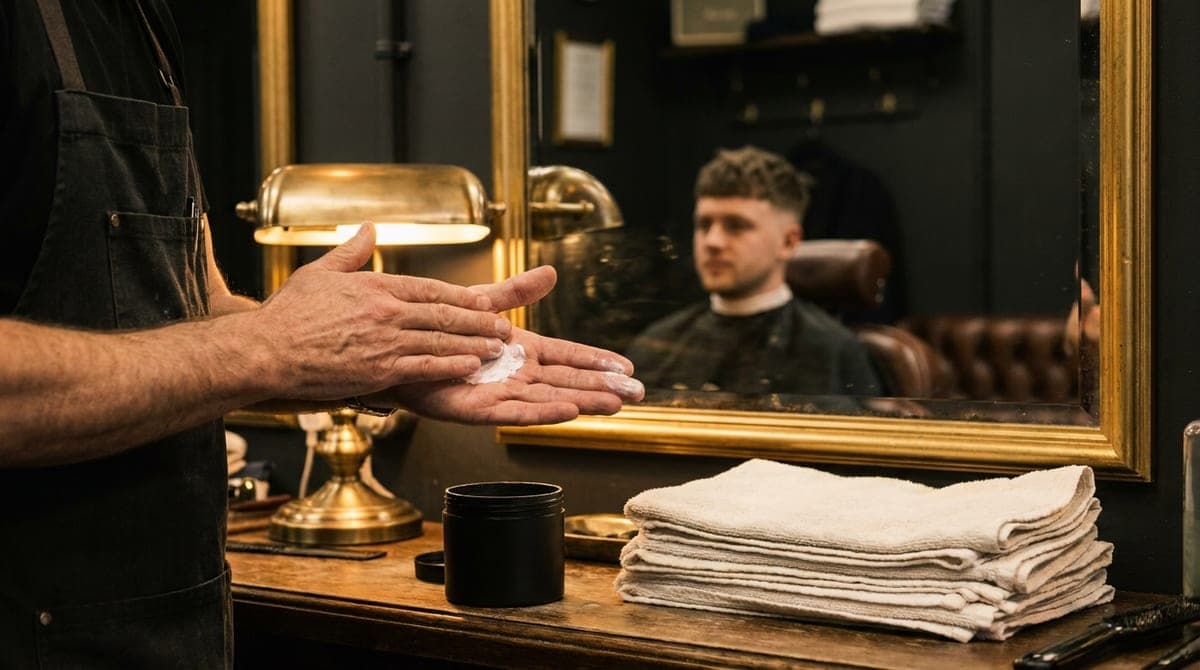
What each one actually is
Clay. Bentonite or kaolin clay suspended in a wax and oil base. The powder is the whole point: it absorbs oil and scatters light instead of reflecting it, which is where the matte finish comes from. It also swells each strand a little, so hair looks denser with clay in it than with anything else on this list. Firm on day one, softening through the afternoon, and it comes back with damp fingers.
Pomade. Two different products sharing one name. Oil-based pomade is the traditional tin, petrolatum and beeswax, heavy shine, and it never fully sets, which is why you can comb it all day. It also does not dissolve in water. Water-based pomade does a similar job with polymers, gives you a firmer set and rinses out in one wash. If the label does not say water-soluble somewhere, assume it is not.
Wax. Beeswax or a synthetic version, loosened with oils. It is the grippiest of the three on short hair and stays pliable rather than setting hard, which is what makes it good for piecey, separated styles. It is also thick, so the gap between enough and too much is small, and too much wax goes gummy by the evening.
Clay vs pomade vs wax, side by side
| Clay | Pomade | Wax | |
|---|---|---|---|
| Finish | Matte | Wet-look shine | Low sheen |
| Hold | Firm, reworkable | Soft, restyleable | Firm, pliable |
| Suits | Crops, quiffs, fine hair | Side parts, slick backs | Short piecey cuts |
| Out of the shower | One shampoo | Depends on the base | Needs a proper wash |
The table is the short version. The longer version is that these three fail in different ways, and the failure is usually what decides it. Clay dries out coarse hair if you use it daily. Pomade goes flat and greasy-looking on anything fine. Wax collects at the roots, and by the third day it has stopped being a styling product and started being buildup.
Which one your cut actually wants
A textured or French crop. Clay, and it is not close. The cut depends on separate pieces catching the light unevenly, and shine welds them into one solid block. We go through the whole two-minute routine in our guide to styling a textured crop.
A side part, a slick back, a mod cut. Pomade. These are the styles that want a comb to move through them cleanly and hold the line it leaves, and matte clay fights you the moment you try. Go water-based unless you genuinely enjoy the ritual of the oil-based stuff, in which case you already know what you are signing up for. If the slick back is the goal, the harder part is having enough length at the front to comb back, and that comes before any product. The same goes for a comb over fade, where the sweep across the parting is the whole cut.
Fine or thinning hair. Clay, and keep it light. Shine is the enemy here, because a reflective surface over a thin area shows the scalp through it. Matte does the opposite.
Curly hair. None of the three, most of the time. Clay and wax both fight the curl pattern and leave it looking crunchy, and pomade weighs it down. A light cream on damp hair does more for a curl than any tub on this list, and we have sorted curl products by length if you want to know how much to use.
A crew cut, or anything under about three centimetres. Nothing. Three centimetres is the length product needs before it has something to hold onto, so below that there is nothing for a tub to do, and men who use it anyway are mostly moving oil around.
One caveat we would rather say out loud: if you are trying three products to make a cut behave, the cut is the thing to change. A shape that only works with a tub in it is a shape that fails on the mornings you are late.
Getting it back out again
This is the part nobody thinks about in the shop, and it is where most of the trouble starts.
Water-based products, which is most clay and a lot of modern pomade, come out with one shampoo. Oil-based pomade does not. Water alone slides straight off petrolatum, so if you have been rinsing and wondering why your hair still feels coated by Wednesday, that is the answer. Wax is somewhere in between and closer to the pomade end.
Buildup does not look like buildup. It looks like your hair going limp, product that used to work not working, and sometimes flakes at the parting that feel waxy rather than dry when you rub them between your fingers. That last one gets mistaken for dandruff constantly.
There is a practical consequence for booking too. If you turn up with three days of clay in your hair, the comb drags, the hair does not fall where it naturally falls, and we are cutting a shape that will move the next time you wash it. Come with it clean if you can. If that is not realistic, book the Wash & Cut at £18 and we will take it out at the basin first, rather than the £15 haircut in a 30 minute slot. What a sensible washing rhythm looks like is covered in our piece on how often to wash it.
What to buy if you own nothing
Start with one tub of matte clay. It suits more of the cuts we do than anything else, it is forgiving if you get the amount slightly wrong, and it will not embarrass you if the weather turns, which is not true of every option in what survives a muggy London day.
Buy the small tub. A tub you have used twice tells you more than a big one you feel obliged to finish.
If you already own something and the label has worn off, there is a quick way to find out what it is. Rub a little between your fingers and hold them under a cold tap. Water-based product goes milky and rinses off. Oil-based smears, beads up and leaves your fingers still feeling coated. Whatever it does on your fingers is roughly what it does in your hair every night you do not shampoo.
And bring it with you next time. If you tell us what you are using and we can see the result, we can cut the shape around it, or tell you plainly that the tub is not the problem.
Common questions
- Is clay or pomade better for fine hair?
- Clay, almost every time. The clay powder in it swells each strand slightly and leaves no shine, so the hair reads thicker. Pomade adds weight and gloss, and gloss on a thin patch shows the scalp underneath it.
- What is the difference between water-based and oil-based pomade?
- What happens in the shower. Water-based rinses out with one shampoo. Oil-based is petrolatum and beeswax, it does not dissolve in water, and it will still be in there tomorrow unless you wash it properly.
- Can I use clay and pomade together?
- You can, though there is rarely a reason. If you want hold plus a bit of sheen, use a paste instead, which is already halfway between the two.
- How much product should I be using?
- About a pea for a short cut, warmed between dry palms until you can barely see it. Nearly everyone who tells us their product stopped working is using two or three times that.
- Do I need product at all after a crew cut?
- No. Product needs about three centimetres before there is anything for it to hold onto, and a crew cut is around an inch at the front and shorter behind it, so a matte clay on one mostly sits on the scalp. Save your money until it grows.
Read next
How To
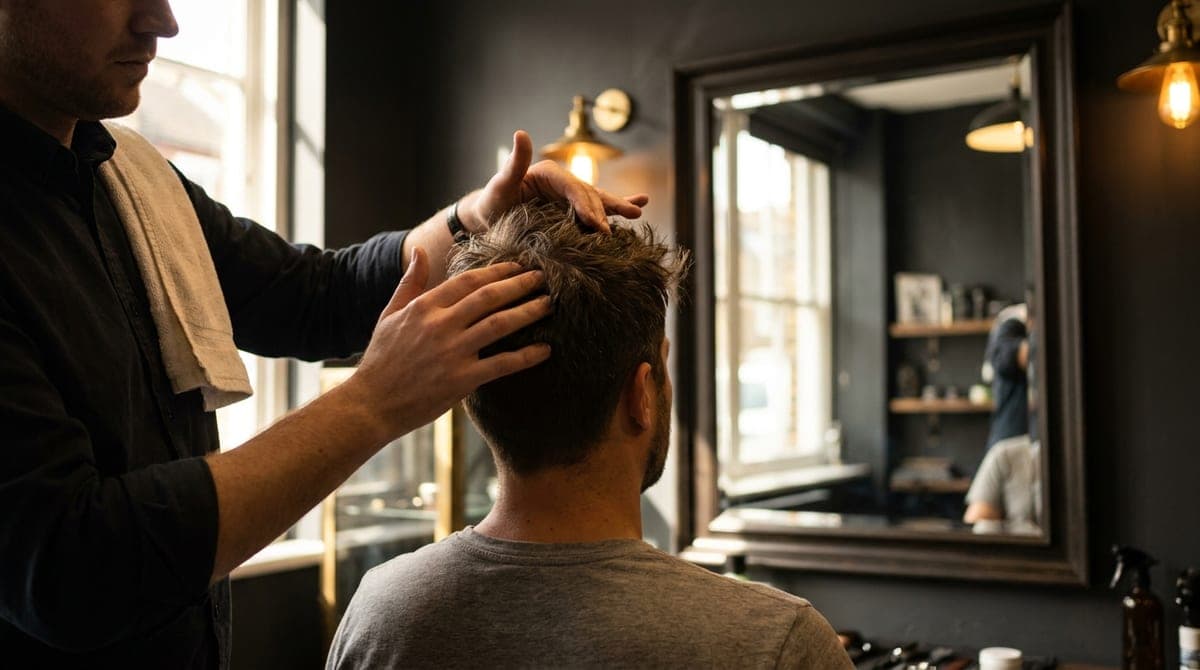
How to Style a Textured Crop
How to style a textured crop in under two minutes each morning, using the product and finger-work our barbers on Harrow Road actually recommend.
5 min
Products
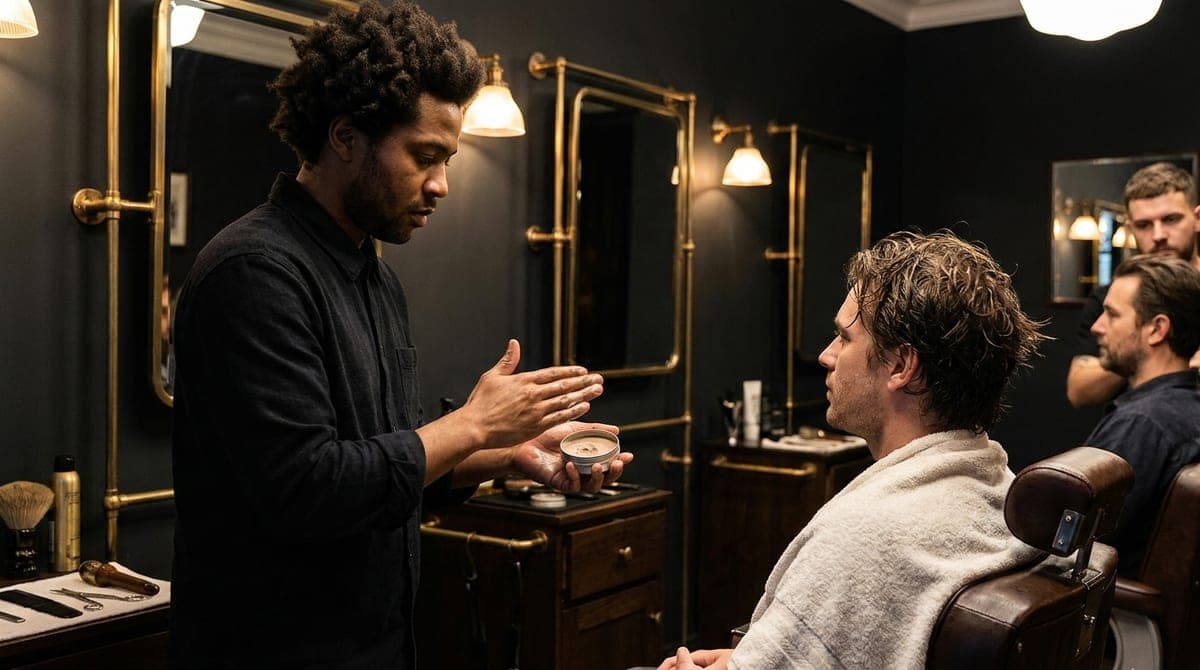
The Best Men's Hair Products for Humidity
The best hair products for humid weather, the ones that fail by lunchtime, and what to leave on the shelf. Honest advice from our Harrow Road chairs.
6 min
Barbershop FAQ
How Often Should Men Wash Hair? By Hair Type
Two or three times a week for most men. A table for every hair type from fine to afro, whether a daily wash is too much, and how often boys should wash.
9 min