A two block haircut is short clippered hair on the sides and back, cut off sharply at a line above the ears, under a top section left long enough to fall past that line and cover it. There's no blend between the two. That hard join is the entire point of the cut, and it's what separates it from a fade, which grades the sides in stages specifically so there's no line to find. An undercut also keeps a hard step rather than a blend, so a two block and an undercut share that much - what tells them apart is the shape of the line itself.
Two Block Haircut: The K-Style Cut Explained
What a two block haircut actually is, how it differs from an undercut, and what to ask for if you want the Korean cut done properly.
5 min readGolden Scissors, Maida Vale, London
What makes it a two block and not something else
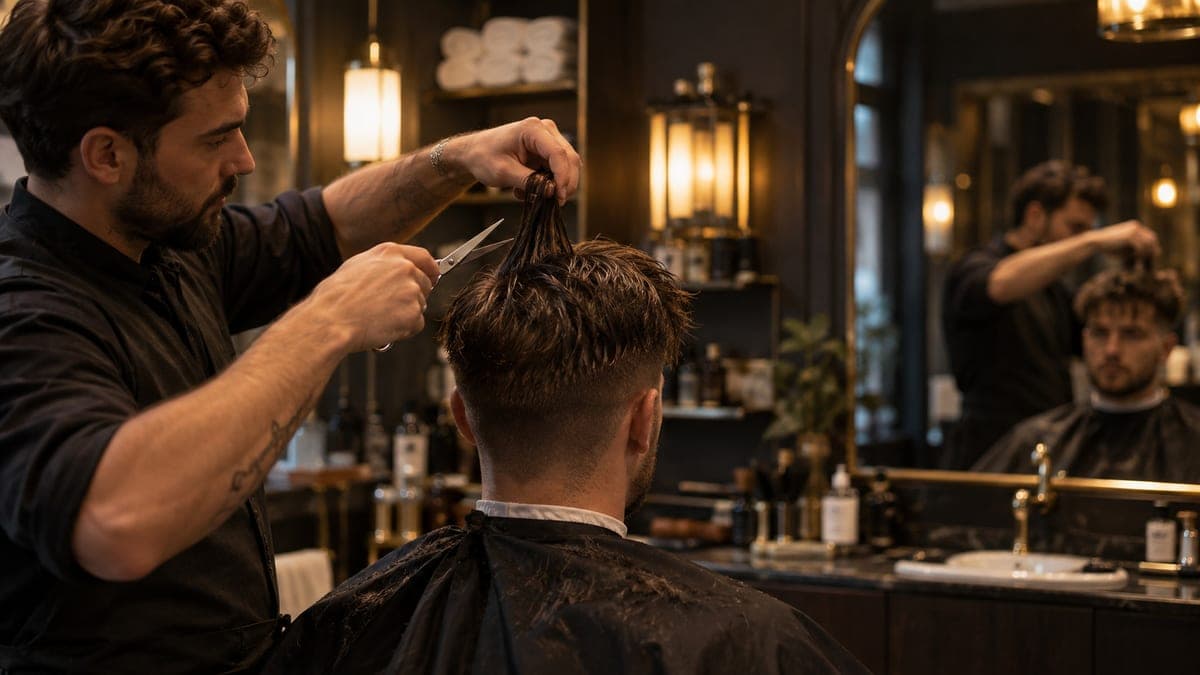
The name comes from the two clear blocks of length: one long, one short, with nothing gradual joining them. We cut a horseshoe-shaped line running from above one ear, round the back above the crown, to above the other ear. Below that line, clippers take the sides and back down to a one or a two guard. Above it, the top stays long, usually four to six inches at the crown, cut with scissors so it has enough weight to fall forward and rest over the short section rather than standing up off it.
Get the line in the wrong place and the whole cut reads wrong. Too high and the short section shows below the fringe when you move. Too low and there isn't enough long hair to cover the join, so it looks unfinished rather than deliberate.
How it differs from an undercut or a fade
An undercut is short sides under long top too, and like a two block it keeps a hard step rather than blending the join - we've written before about how an undercut and a taper actually differ, and it's the taper that does the blending, not the undercut. What tells a two block apart from a plain undercut is the line itself: a horseshoe running up and over the back of the crown, rather than a straight step around the sides at one height. A fade goes further than either, climbing the sides in stages so there's no line at all to find. If you've had a fade before and ask for a two block, the first thing you'll notice is how much shorter the sides feel underneath, because there's no gradual grade easing you into it.
Why British hair needs a small adjustment
This cut was built around straight East Asian hair, which sits flat and heavy and drapes cleanly over a horseshoe line without any help. A lot of hair we cut in the shop isn't that texture. Wavy or curly hair has lift at the root, so it doesn't fall flat over the join the same way, and on a straight cut to the same length the short section peeks through at the crown. We deal with this by taking the top a touch longer than the classic Korean length and taking the horseshoe line a fraction higher, so there's more length doing the covering. It's a small change, but skip it and a curly-haired man walks out with a cut that looks patchy rather than sharp.
What to ask for in the chair
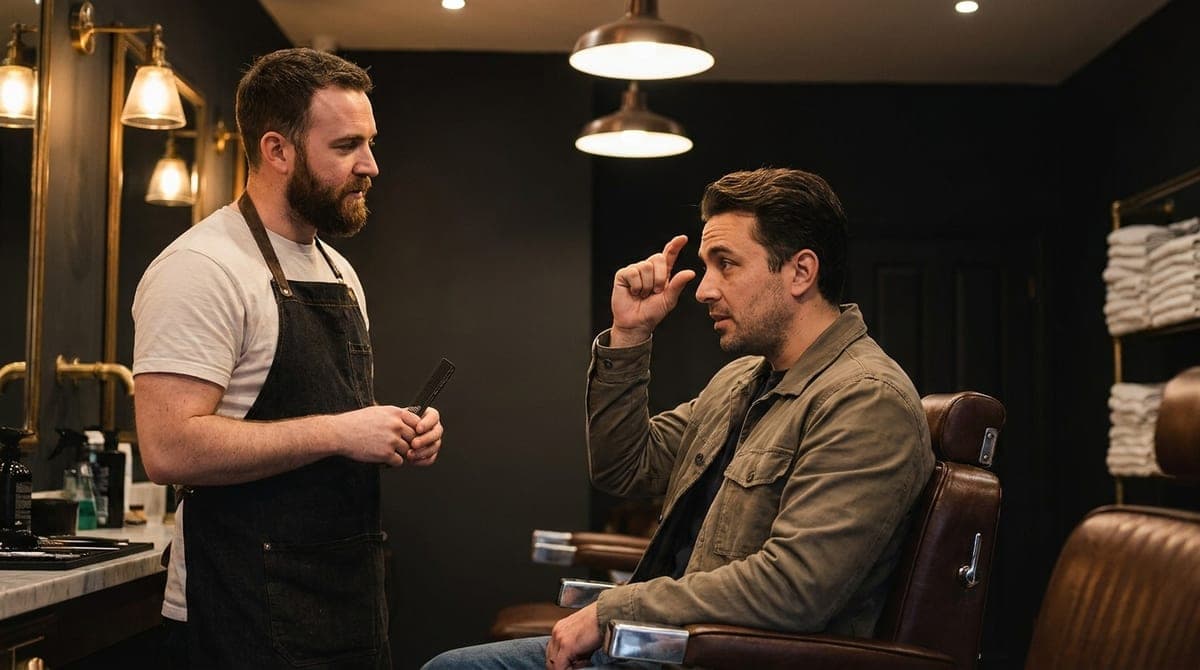
Say "two block, hard line, no fade" and point to roughly where you want the line to sit, because "above the ears" still leaves us a couple of inches of choice. Tell us your hair type too, since that's what decides how long the top needs to be to do its job. If you want the front section long enough to style forward or into a slight quiff, say so at the start rather than after we've already cut the sides, because the two decisions affect each other.
We'll usually check the line with the top section wet and combed flat, then again once it's dried and has its natural fall, because hair that covers the join perfectly wet can spring up and show it the moment it dries.
Who it actually suits
Hair density matters more here than for most cuts. Thin or fine hair struggles to build the weight needed to fall properly over the join, so the top can look see-through right where it needs to cover the most. If that's your hair, we'll usually leave it slightly longer at the crown than we would for someone with thick hair, just to get the coverage without it looking heavy.
Face shape plays a smaller part than people expect, because the length and fullness on top does most of the work regardless of what's underneath. Where it does matter is a strong jaw or a round face: styled forward with a bit of fringe weight, the cut softens both. Pushed straight back off the forehead, it does the opposite and can make a round face look rounder. We'll tell you which way we think it should sit before we start cutting, not after.
Keeping it sharp between visits
The top needs a light product to control the fall rather than weigh it down completely, much the same approach we set out in how to style a textured crop: a small amount of matte paste or a light wax worked through damp hair and left to dry, rather than a heavy pomade that makes longer hair on this cut look flat and greasy. Avoid combing it straight back on humid days, because that's exactly when a two block shows its short section fastest.
The cut itself needs redoing every three to four weeks, sooner than most fades. Because the short section is regrowing against hair that barely moves at that length, the contrast that makes the style work closes up quickly. Book before it gets there and it's a quick tidy of the line. Leave it to five or six weeks and you're not touching up a two block any more, you're growing out of one, which is a longer job and a different conversation about where to take it next. Book a chair and we'll set the line properly the first time, so you know exactly what you're maintaining.
Common questions
- Is a two block haircut just an undercut?
- No. Both keep the sides short and the top long, and both keep a hard step rather than a blend - that part they share. What makes a two block its own cut is the line itself: a horseshoe that runs up and over the back of the crown, not just a straight step around the sides.
- Does a two block haircut suit curly or wavy British hair?
- Yes, but the line needs adjusting. Straight hair sits flat over the join and hides it completely. Wavy or curly hair lifts, so we take the top a touch longer and clean the line a fraction higher so it still covers properly.
- Can I have a two block with a soft fade instead of a hard line?
- You can, and plenty of men prefer it. It stops being a true two block at that point, technically, but the shape and the long top are the same. Tell us which you want, because it changes where the clippers stop.
- How much does it cost and how long does it take?
- It's booked as a standard Haircut, £15 for 30 minutes. If your hair is thick or you want it razor-lined at the front, allow a little longer.
- How often does it need cutting to keep the line sharp?
- Every three to four weeks. The line itself grows out fast because it's short hair regrowing against long, so at five weeks it stops looking disconnected and starts looking like you forgot to finish the back.
Read next
Style Guide
Taper Fade vs Undercut: Which Suits You?
Taper fade vs undercut: one blends all the way down, the other leaves a hard step, and your hairline and your morning routine decide which one you want.
6 min
How To
How to Style a Textured Crop
How to style a textured crop in under two minutes each morning, using the product and finger-work our barbers on Harrow Road actually recommend.
5 min
Barbershop FAQ
How to Ask for a Haircut: What to Say
How to ask for a haircut in words a barber can cut to: the four decisions, what a photo is actually for, and the one sentence that saves ten minutes.
7 min