
On a muggy day you want product that holds without shine and does not drink water out of the air. For most short to medium cuts that means a matte clay or a water-based paste. For longer, textured hair, sea salt spray. For curls, a light cream, and if your style really cannot be allowed to move, a flexible hairspray misted over the top. The best hair products for humidity all share one trait: they set your hair in place without inviting the weather in. Glossy pomade does the opposite.
The Best Men's Hair Products for Humidity
The best hair products for humid weather, the ones that fail by lunchtime, and what to leave on the shelf. Honest advice from our Harrow Road chairs.
6 min readGolden Scissors, Maida Vale, London
What humidity does to your hair
Hair takes on water from the air. On a damp, warm day every strand absorbs a little moisture and swells, and the swelling is uneven, so hair that dried straight this morning starts bending wherever it has a mind to. If your hair has any wave in it, that reads as frizz. If it is fine and straight, the water just adds weight and the style sits flat against your head by mid morning.
That is a different problem from sweat. Sweat comes from you, carries oil down from the scalp, and makes hair look wet and stringy at the roots. It has its own fixes, which we covered in our piece on greasy hair in hot weather. Humidity comes from the air and gets into the whole length of the hair, so no amount of washing prevents it. The only thing standing between your style and the weather is what you put in your hair after the shower.
London does not do tropical heat, but it does muggy very well. Rain in the morning, warm by noon, and the air on the Bakerloo line doing its own thing entirely. Those are the days this post is about. Rain landing directly on your head is a different job again, and we went through what to do when you get caught out in it separately.
The best hair products for humidity
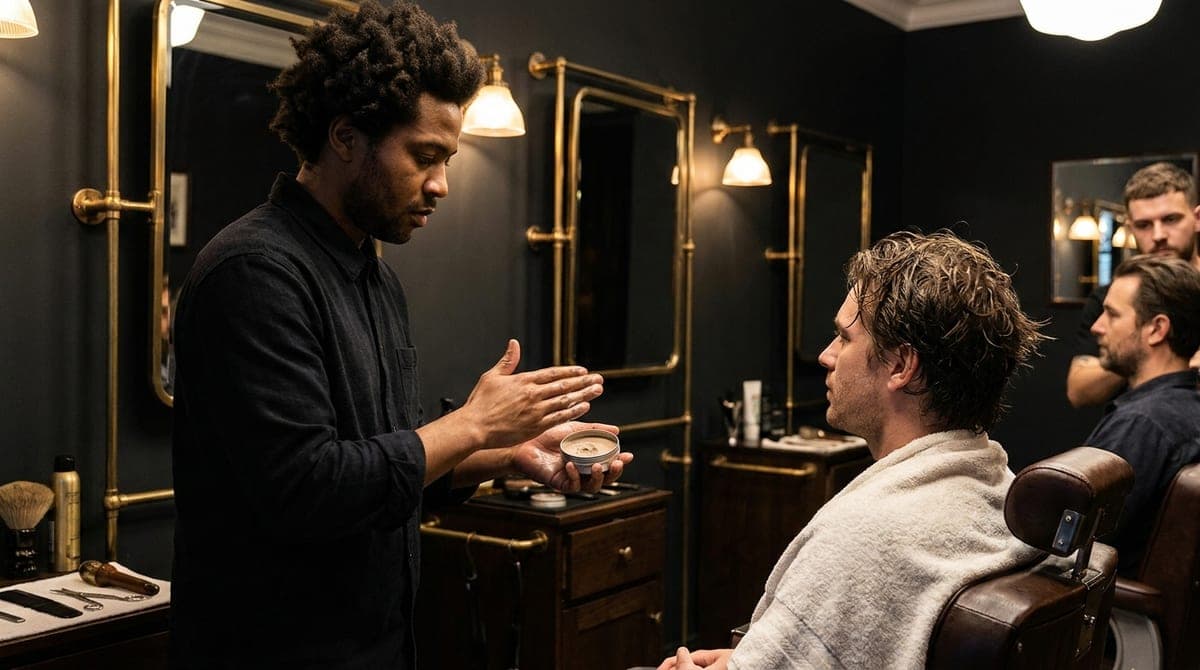
Matte clay is the one we suggest most often from the chair. It grips through damp air, thickens each strand slightly, and because there is no shine in it your hair does not look wet when the air is. A clay also forgives you. If the afternoon has pushed things about, damp fingers and ten seconds put it back.
Water-based paste suits medium-length styles that need to move. It sits between clay and pomade: decent hold, low shine, and it washes out with one shampoo instead of three. If clay leaves your hair feeling like straw, this is the swap.
Sea salt spray is for anyone wearing texture. Sprayed onto damp hair and dried in with your fingers, it roughens the surface of each strand so the hair stands up on its own rather than being propped up by product. That matters in humid weather, because a heavy product plus water from the air is exactly how a style ends up flat and sticky by lunch.
A light cream or leave-in is the answer for wavy and curly hair, and it works for the opposite reason. A curl that already has moisture in it has less room to pull more from the air. Work a small amount through damp hair, scrunch, then leave it completely alone while it dries. Touching a drying curl is where most frizz actually comes from.
Flexible hairspray is a top layer, not a style on its own. A short mist over the finished hair seals the surface against the damp. Look for the word flexible or natural on the tin. The old rock-hard stuff does hold, but the first time you touch it, it cracks, and you spend the rest of the day with a hinge in your fringe.
What to leave on the shelf
Anything with shine on the label. High-shine pomade looks sharp in dry air, and in humid air it looks like you have been caught in the rain. The finish you paid for and the finish sweat gives you for free are the same finish.
Heavy wax has a different failure. It does not lose hold, it goes gummy, and by the end of a muggy day it is sitting in your hair like something you would rather not name.
Wet-look gel dries into a shell, and damp air softens the shell until it flakes. White bits along your parting by 3pm.
Check the ingredients for glycerin too. It is in a lot of products because it pulls moisture into the hair. That is genuinely useful in dry winter air and exactly wrong in August. If glycerin is in the first few ingredients, keep the product, just keep it for winter.
Dry shampoo deserves a mention because men reach for it on bad hair days of every kind. It absorbs oil, and that is all it does. It will not stop frizz, so on a muggy day you are adding powder to damp hair. Not a combination we would choose for you.
Getting it to last past lunchtime
Start with dry hair. Properly dry. Clay and paste grip dry hair; on damp hair they slide, dilute and give you about an hour of hold.
Use half of what you think you need. Warm it between your palms until you can barely see it, work it through the back and sides first and finish at the front. The front gets the least because it is the part you touch all day, and every touch moves product and oil around.
On a genuinely bad day, layer. Salt spray on damp hair, dried in. Then a small amount of clay. Then one short mist of flexible hairspray. Three light layers will survive weather that one thick handful will not, because no single layer is heavy enough to collapse.
Then keep your hands out of it. Every pass of your fingers breaks the surface the product has set and lets the damp air in. Fix it once at lunchtime if you must, with damp fingers, and leave it at that.
The cut is half the answer
No product survives humidity on a cut carrying too much weight. Length is surface area, and surface area is where the air does its work. The summer cuts that hold up share one thing: they are short enough, or textured enough, that the style does not depend on volume the weather can take away.
Tight sides help more than most men expect. When the top gives up, a clean fade or taper means two thirds of your head still looks deliberate.
A haircut here is £15 and takes half an hour. Tell whoever is on your chair that your hair dies by lunchtime in summer, and we will build the cut around that: weight out of the top, texture through it, a length your hair can actually support on a wet-air day. Texturising costs nothing extra, it is just scissor work.
Next time you are in, bring the product you actually use, or a photo of the tin. It is much easier to tell you whether the product or the cut is the problem when we can see both. If you would rather start from scratch, book a haircut and ask what to put in it afterwards. We would rather tell you across the chair than have you guessing in the aisle at Boots.
Common questions
- What is the best hair product for humid weather?
- For most short to medium cuts, a matte clay. It holds through damp air without shine and can be reworked with your fingers during the day. Curly hair does better with a light cream, and longer textured styles with sea salt spray.
- Does hairspray work in humidity?
- As a final light mist over a finished style, yes. Pick one labelled flexible or natural hold. The rock-hard ones do hold, but they crack the first time you touch your hair.
- Why does my hair go flat when it is humid?
- Fine, straight hair takes on water from the air, and the extra weight drags the style down. A shorter cut with some texture in it, held with a matte product, drops far less than a longer one relying on volume.
- Should I avoid glycerin in hair products?
- On muggy days, yes. Glycerin pulls moisture into the hair, which feeds frizz when the air is damp. In dry winter air the same ingredient is doing you a favour, so save those products for January.
Read next
Hair Health
Stop Your Hair Going Greasy in Hot Weather
Why hair turns greasy in summer, what to change about washing and product, and the haircuts that hide it best. Straight advice from a Maida Vale barbershop.
5 min
Seasonal
Best Summer Haircuts for Men in 2026
The cuts that actually hold up in London heat, what to ask for, what each one costs and how often it needs tidying. From the barbers on Harrow Road.
4 min
Hair Health
How to Protect Men's Hair from Sun Damage
What sun damage does to men's hair and scalp, how to spot it, and what to change about your routine and your cut. From the barbers on Harrow Road.
6 min