The best black tie hairstyles for men are the ones you already wear, made tidier: a side parting, a slick back, a short crop or a fade with a neat top, with a clean neckline and a little less shine than you would expect. A dinner jacket is a uniform. Everyone in the room is in the same black and white, so your hair gets looked at more than usual, and what people notice is whether it looks finished.
Black Tie Hairstyles for Men, From a Barber
Black tie hairstyles for men, worked out from the hair you already have: what to do about the neckline, the shine, the beard and the hour before you leave.
6 min readGolden Scissors, Maida Vale, London
The short version
- Keep your own cut. Have the edges done a few days before and leave the style alone.
- Low sheen beats wet-look. Flash photos turn gloss into grease.
- The back of your neck sits on a stiff white collar all night. Get it tapered.
What a dinner jacket does to a haircut
Most of what you wear to a black tie event is decided for you. The jacket is black or midnight blue, the shirt is white, the tie is a bow. That leaves your head as the only part of you that differs from the man in the next seat, and it sits directly above the sharpest contrast in menswear: a white collar against a black lapel.
Two things follow from that. Anything untidy at the edges shows, because the collar draws a hard white line right under it. Fuzz on the neck, hair over the top of the ear and sideburns of two different lengths all pass unnoticed over a jumper. Over a dress shirt they do not.
The other is that the style on top matters less than you would think. Most guides to black tie spend their time telling you to copy a film star's side parting. We would rather you turned up with your normal hair, properly finished, than with a parting your hair has never held before.
Black tie hairstyles for men, by the hair you have
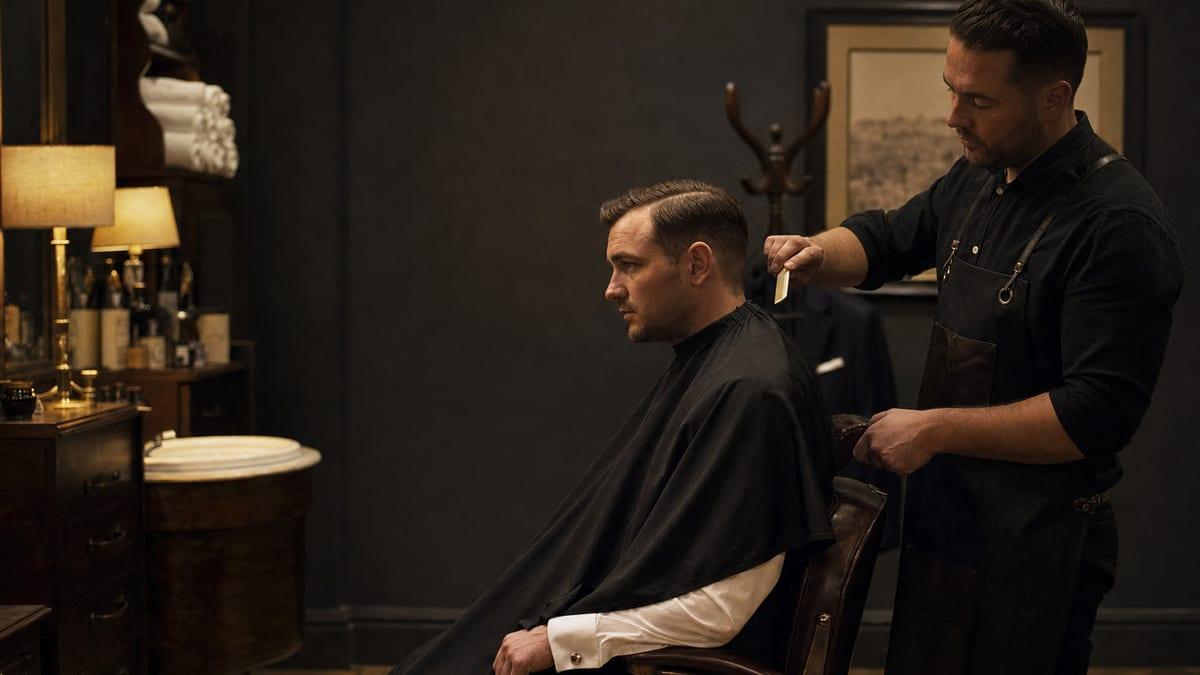
Short all over, a crop or a fade. You are nearly done already. Ask for the top to be left a touch longer than usual so it can be pushed to one side or forward neatly, not spiked. A skin fade is fine with a dinner jacket. A fade with a messy, choppy top reads as a night out. The same fade with the top combed into one direction reads as formal.
Enough on top to part. This is the easy one. A side parting is the classic for a reason: it puts every hair in a known place and keeps it there. Part it where it naturally falls. Forcing a parting onto the other side for one night means it will have crept back by the speeches.
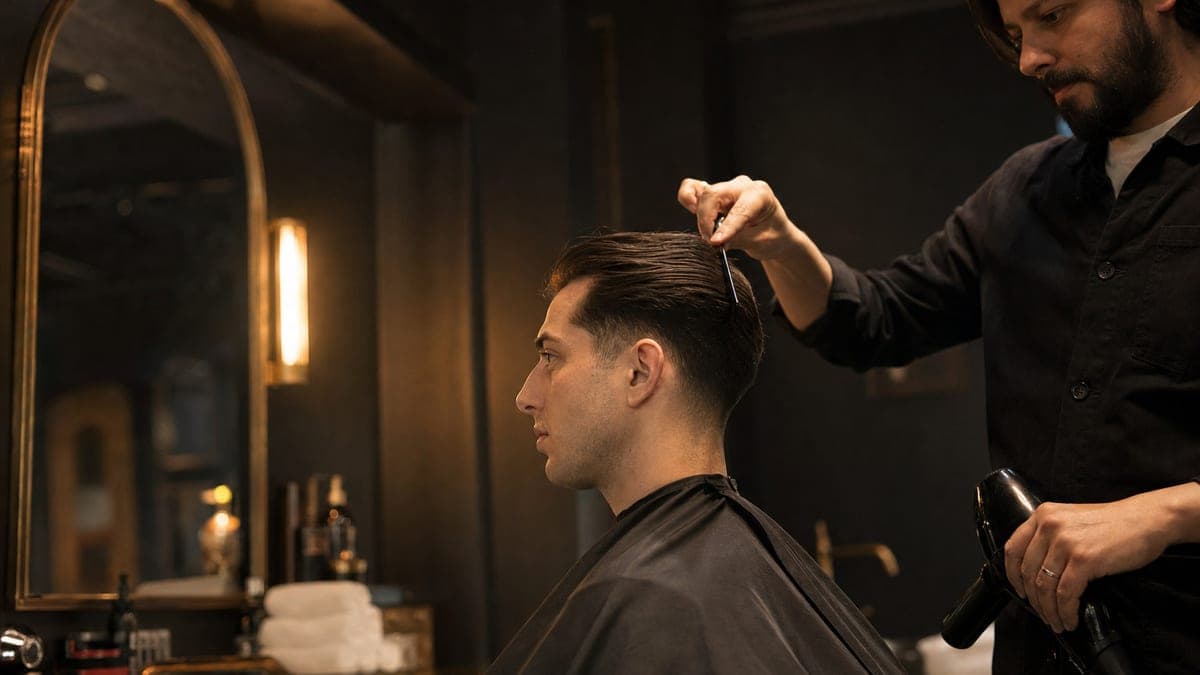
Long enough to go back. A slick back suits black tie better than any other style, as long as your hair really is long enough to stay there. If it springs forward on a normal day it will do the same at ten o'clock in a hot room. We set out the lengths in how long hair needs to be to slick back. Check yourself against it before you commit.
Curly or afro hair. Do not straighten it or flatten it for the night. Curls that have been given moisture and a defined shape look far more deliberate than curls that have been fought. What makes it formal is the outline: a fresh line-up or a taper round the ears and neck, and an even shape on top with nothing sticking out at the sides.
Past the collar. Long hair is fine if it is clean, dried properly and off your face. Tuck it behind the ears or tie it low at the nape. A high bun pulls the eye up and away from the collar and the tie, which are the whole point of the outfit.
Thinning or shaved. Take it shorter than you normally would and keep it matte. If you shave your head, shave it the night before rather than that morning, so any razor redness has a night to calm down, and put a little moisturiser on so it is not dry and flaky under the lights.
The back of your neck is in every photo
At a dinner you spend the evening seated at a round table with a photographer walking behind you, and then standing in groups with your back to half the room. More people will see your neckline than your fringe.
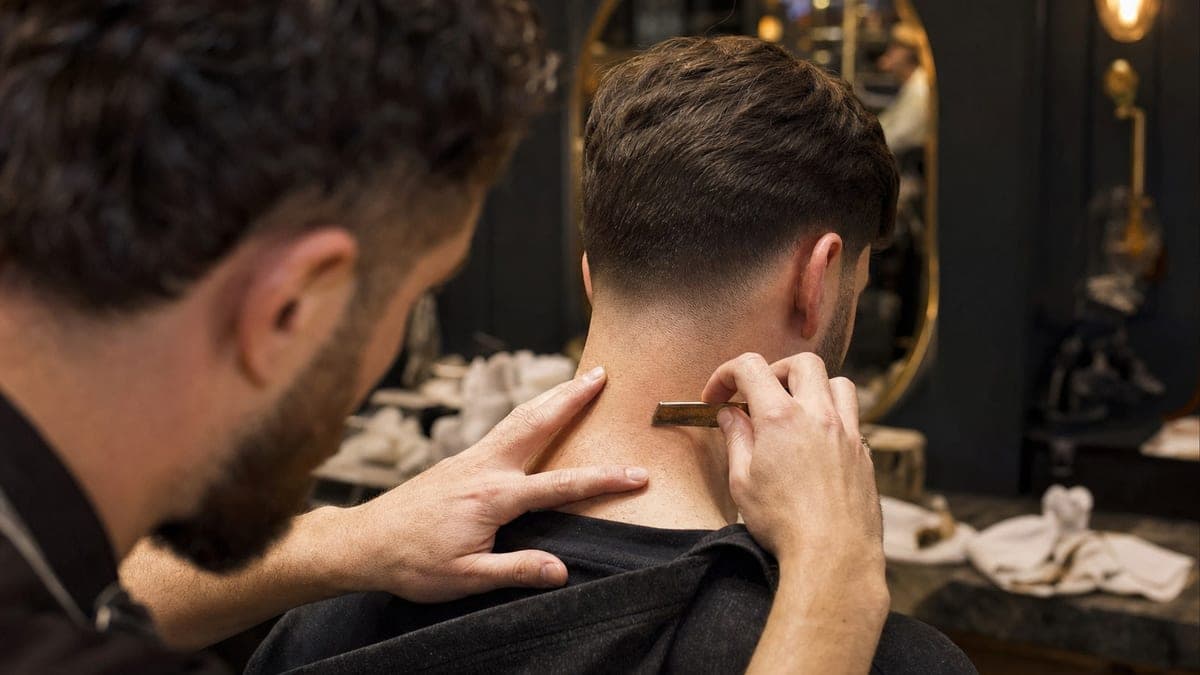
A dress shirt collar is stiffer and stands higher than an everyday one, and it sits on the exact strip of neck where a haircut ends. A squared-off neckline looks sharp for a few days, then grows a step that sits right on top of that collar. A tapered one, where the hair gets shorter until it runs out, has no edge to go wrong. For black tie we would taper it nearly every time, and we explain the three finishes in our piece on shaping a neckline.
Timing matters here more than on top. Two or three days before for a fade, four or five for a scissor cut, the same counting back we went through for an interview haircut. Not the same afternoon if you can help it. A fresh cut drops short hairs for hours, and they land on a white collar and black shoulders where every one of them can be seen.
Use less shine than the old photos suggest
The picture in most men's heads is a 1930s film star with hair like patent leather. In a ballroom with a photographer's flash going off, that much gloss looks wet, and on fair or fine hair it shows the scalp through it.
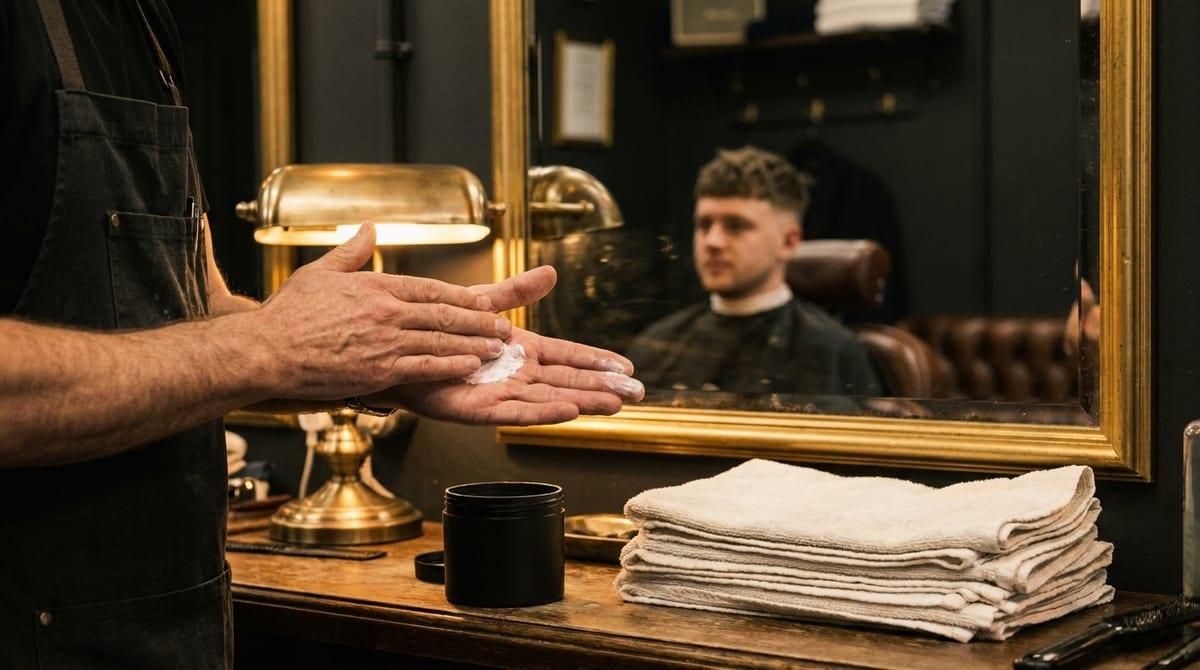
Aim for a low sheen: a cream, a paste, or a small amount of water-based pomade worked through properly, so the hair looks healthy and combed. If you only own a matte clay, that is fine for a crop and a bit dry-looking for a parting. The differences are laid out in clay, pomade and wax side by side. Whatever you use, start with half your usual amount. You can add more in the cloakroom, but you cannot take it out.
The beard and the bow tie
A bow tie sits directly under your chin, so the beard and the tie are fighting for the same few inches. If the beard is long enough to cover the knot, the tie may as well not be there. Have the length underneath taken up so the bow shows in full, and have the neckline of the beard cut cleanly above the collar, so the two do not meet.
Stubble needs a decision. Two days of even growth with tidy cheek lines looks fine. Four days with a fuzzy neck looks like you forgot. A beard trim with us is £11 on its own, or £24 together with a £15 haircut, and both fit in one visit.
The hour before you leave
- Wash your hair that day, even if you normally skip days. Yesterday's product under today's product is where the greasy look comes from.
- Dry it into shape with a dryer, in the direction you want it to sit. The dryer does the holding. The product only finishes it.
- Do your hair in your shirt, before the jacket goes on. Then wash your hands with soap. Product on your fingers ends up on the collar or the shirt front while you are tying the bow, and it does not come out with a napkin.
- Put the jacket on and brush the shoulders. A dark jacket shows every loose hair and every flake.
- Get someone to take a photo of the back of your head with the flash on. It is the view everyone else gets, and the only one you never see.
If the photo shows a neckline you are not happy with, that is a five-minute job for a barber. It is not one for you, a hand mirror and a razor at six in the evening.
Common questions
- Can I wear a skin fade with black tie?
- Yes. A fade is a tidy outline, which is what the dress code wants. Keep the top neat rather than messy and have it cut two or three days before, so the skin is not freshly raw above a white collar.
- Should I get my hair cut on the day of a black tie event?
- Better not to. A fresh cut sheds short hairs for the rest of the day and they show on a white collar and black shoulders. If the day itself is your only chance, go home and shower before you dress.
- Do I need long hair for a formal style?
- No. A short crop with a clean neckline and tidy ears is as formal as a slick back. Black tie is about the hair looking finished, not about a particular length.
Read next
Style Guide
Slick Back Hair for Men: The Length It Needs
How long hair has to be before it will slick back and stay there, what to do with the sides while it grows, and why it falls forward by lunchtime.
6 min
Products
Clay vs Pomade vs Wax: Which Do You Need?
Clay vs pomade vs wax explained by barbers who see the results three weeks later: what each one does, which suits your cut, and how to wash it out.
6 min
How To
How to Shape Neckline at Home: Emergency Fix
How to shape neckline hair at home when you cannot get to a barber: what to trim, what to leave alone and how to avoid the ledge. From Harrow Road.
5 min