Slick back hair for men needs about four inches on top at the front, tapering to around three at the crown, before it will lie back and stay there through a working day. Shorter than three inches at the hairline and the hair has nothing to bend over with, so it springs back up or stands forward by the afternoon. The sides can be anything from a skin fade to two inches swept over the ear.
Slick Back Hair for Men: The Length It Needs
How long hair has to be before it will slick back and stay there, what to do with the sides while it grows, and why it falls forward by lunchtime.
6 min readGolden Scissors, Maida Vale, London
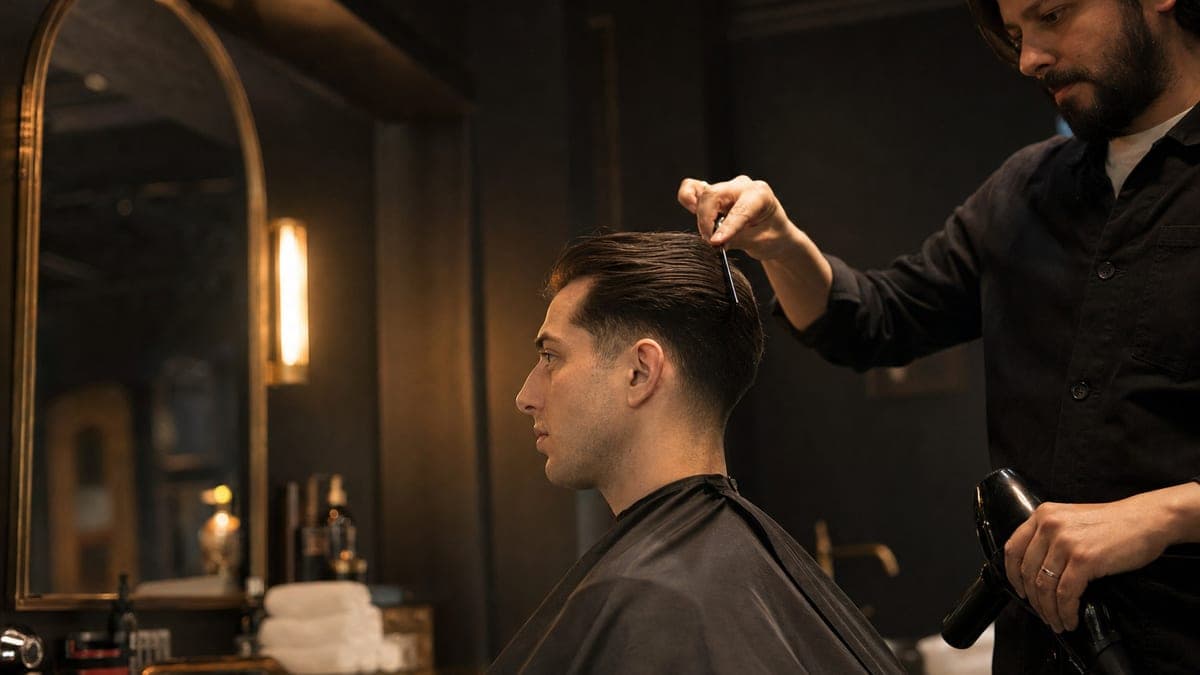
How long your hair needs to be to slick back
The front is the part that decides it. Hair at the hairline has to travel the furthest and bend the most, and it nearly always grows forward or to one side, so it is fighting the comb the whole way. The crown has an easier job, which is why it can be shorter.
| Length at the front | What happens when you comb it back |
|---|---|
| Under 2 inches | Stands up. You have a brushed-back crop, not a slick back |
| 2 to 3 inches | Lies back with a firm product, lifts again by the afternoon |
| 3 to 4 inches | A short, neat slick back that holds a full day |
| 4 to 6 inches | The classic version, long enough to sit flat and reach the crown |
| Over 6 inches | Heavy enough to stay back on its own, but it starts to flick up at the nape |
Coming from a short crop, the maths is slow. Three inches is a little over seven and a half centimetres, and at about a centimetre of growth a month that is seven or eight months before the front is long enough. Start now and you are slicking it back properly by early summer, not for the Christmas party.
What to do with the sides
Three options, and they age differently.
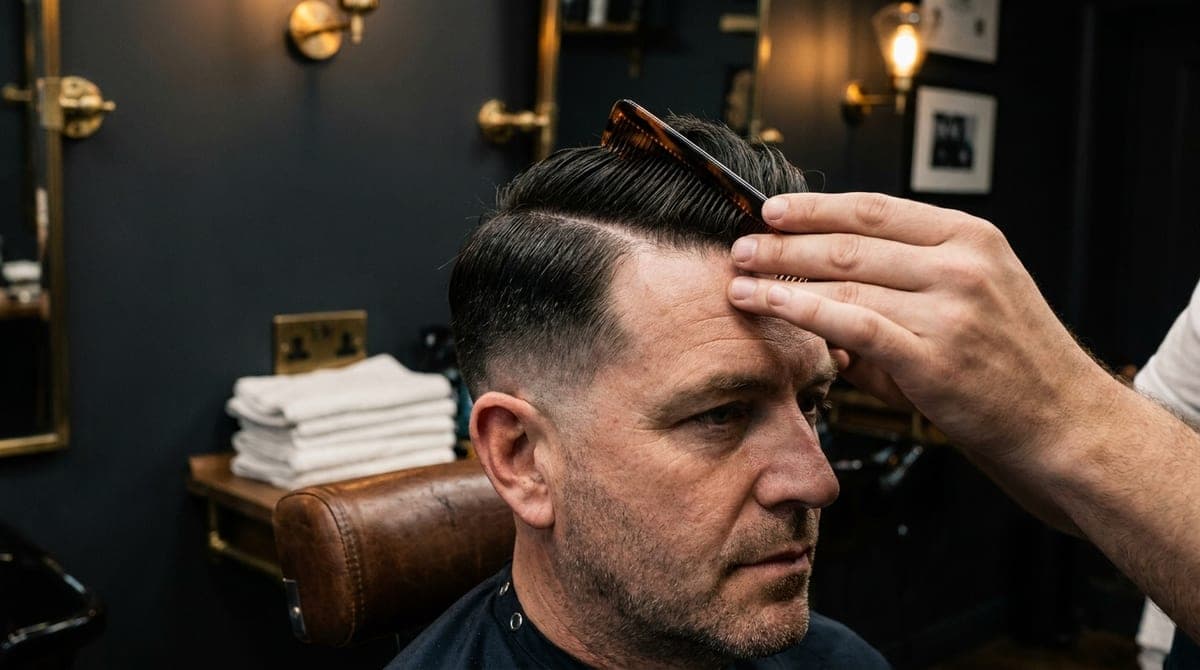
A fade or a short taper. The easiest to live with. The sides cannot puff out over the ears, so the shape stays narrow and the top looks longer than it is. A mid or low fade sits better than a high one, because bare skin halfway up the head next to a flat, shiny top looks severe rather than sharp.
An undercut. The sides and back cut short with no blend into the top, so the long hair lies over a clear step. Very sharp for two weeks. After four, the short hair underneath starts pushing the long hair out from below and you can see the join from across a room.
Long sides swept back. Two inches or so, combed back over the ear with the same product as the top. It is the softest version and the slowest to grow out, but it needs the most product and goes fluffy over the ears in wet weather.
While you are growing the top, keep cutting the sides. This is the one thing that makes the grow-out bearable. A taper fade every four weeks keeps the head looking deliberate while the length builds on top, and it is £17 for forty minutes here. Say clearly that the top is not to be touched, otherwise it gets tidied out of habit.
Your hair type changes the numbers
Thick, straight hair has the weight to sit down, but it also has the spring to stand back up. It needs the full four inches and a product with real hold.
Fine hair lies back easily, which sounds good until you see it under a light. Fine hair combed flat separates into lines and shows the scalp between them, and a high-shine product makes that worse. A matte or low-shine finish and slightly less length, three to four inches, looks fuller.
Wavy and curly hair shrinks as it dries, so it needs more length than it looks like it does when wet. Add an inch to the table. Curls slicked back hard with a wet-look gel go crunchy. A cream or a soft pomade combed through damp hair keeps the wave and still points it backwards.
A receding or thinning front is where we would steer you away. Hair pulled straight back from a thinning hairline puts the temples on display. There is more on what does work in our piece on haircuts for a receding hairline. A slick back with a side parting, or with the front left a touch forward, softens it if you are set on the look.
How to slick back hair at home
- Start with damp hair, towel dried until it stops dripping. Hair that is soaking dilutes the product and you lose the hold.
- Rub a pea-sized amount of pomade or cream between your palms until it disappears, then work it through from the roots, not just the surface.
- Blow dry it backwards on a medium heat, pointing the nozzle from the forehead towards the crown and following a comb or your fingers. Skip this and the slick back is only as good as the product holding it; the dryer is what actually trains the roots to point backwards. We go through which way to point the dryer for every style, slick backs included.
- Once it is dry, a second, smaller amount of product on top, combed straight back with a fine comb for a clean finish or with your fingers for a looser one.
- Finish the sides last, combing them back and slightly down so they do not flare out over the ears.
A wet look comes from product on damp hair and no drying. A softer, natural finish comes from drying first and adding product after. Which product suits which finish is a whole question of its own, and we answered it in clay vs pomade vs wax. Short version: water-based pomade for most men, because it comes out in one shampoo.
Why it has fallen forward by lunchtime
Usually one of three things.
The front is too short. If it keeps lifting at the hairline and nowhere else, it needs another month of growth, and no amount of extra product will fix that.
It was never dried backwards. Product on wet hair combed back looks right in the bathroom mirror, then the hair dries in the direction it grows and pulls the product with it. The blow dry in step 3 is what stops that.
You have a strong crown or a cowlick at the front. Hair growing in a whorl at the crown will split a slick back into two directions, and a cowlick at the hairline will push a section up whatever you put on it. We can take weight out of that patch so it lies down, but we can only do that if we know you are planning to slick it back. Tell us before the clippers come out, not after.
If you want to start the grow-out, book a taper fade and say "I am growing the top for a slick back". That one sentence changes how the whole cut is done.
Common questions
- Can I slick my hair back without product?
- For an hour, with water and a comb. Once it dries the hair goes back to the direction it grows in, and at the front that is usually forward. Something with hold is what keeps it there.
- How often should I get a slick back cut?
- Every four to five weeks for the sides and back. The top only needs the ends taking off every second or third visit, unless you are still growing it.
- Do I need a fade for a slick back?
- No. It works with long sides swept back over the ears, a low taper, or a short undercut. A fade just makes it easier to keep tidy, because the sides cannot puff out.
Read next
Products
Clay vs Pomade vs Wax: Which Do You Need?
Clay vs pomade vs wax explained by barbers who see the results three weeks later: what each one does, which suits your cut, and how to wash it out.
6 min
How To
How to Blow Dry Men's Hair, Style by Style
How to blow dry mens hair for a side parting, slick back, quiff, crop or curls: which way to point the air, which tool to hold, and when to skip the dryer.
7 min
Style Guide
Comb Over Fade: The Modern Way to Wear It
What a comb over fade is, how much length you need on top, where the parting should sit and how to style it in two minutes without a fight.
6 min