No. Wearing a hat does not cause hair loss in the way most men mean it. Male pattern baldness, the receding corners and the thinning crown, comes from your genes and the way your follicles respond to hormones, and a beanie or a cap has no say in either. The one real exception is headwear that is tight enough to pull at the hair every day for months. That can thin the hair along the line where it grips, and it is worth knowing what it looks like.
Does Wearing a Hat Cause Hair Loss?
No, a hat will not make you bald. Why it feels like it does when the beanie comes off, the one kind of headwear that can thin hair, and the signs to watch.
5 min readGolden Scissors, Maida Vale, London
Why the hat gets the blame
Men do not invent this worry out of nowhere. There are three good reasons a hat looks guilty, and none of them is the hat.
You can see the hair in it. Everyone sheds a bit every day as part of the normal growth cycle. Most of it ends up in the shower drain or on the pillow, where nobody counts it. Wear a dark knitted beanie for a morning and the lining collects the same hairs and shows you every one of them. Same shedding, better display.
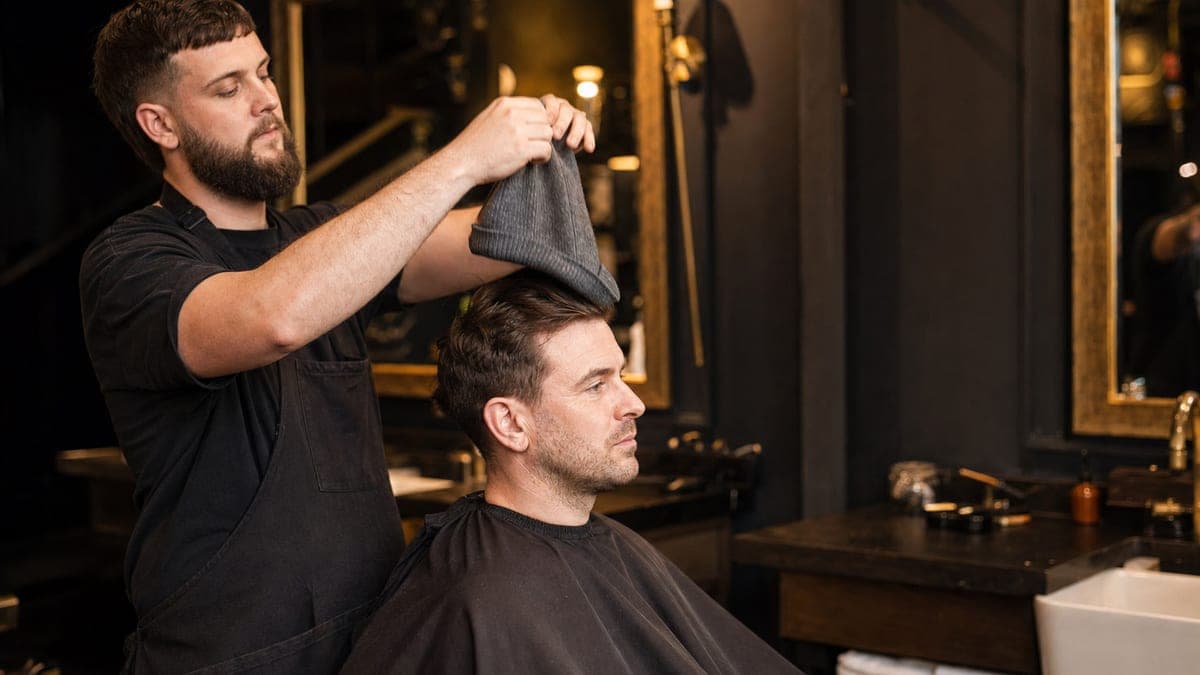
A hat makes thin hair look thinner when it comes off. Hair that has been pressed flat for two hours loses its lift and splits into clumps, and wherever it splits you see scalp. On fine hair that is the crown, the parting or the front, which are exactly the places you were already nervous about. Take the beanie off under a bathroom light and it looks bad. Give it twenty minutes and the same hair covers the same scalp again.
Men who are thinning wear more hats. This is the one we notice most from behind the chair. A man starts wearing a cap because the crown is going. Two years later the crown is further on, and the cap is the thing he can see every day, so the cap gets the blame. The order is the wrong way round.
What the research actually says
Not much, and that is worth saying plainly. Cleveland Clinic, asking a dermatologist this exact question, says the subject has not been well studied, and that occasional hat wearing is unlikely to cause any hair loss.
The study that gets quoted most looked at 92 identical male twins. Within each pair, the twin who wore a hat every day had less hair loss at the temples than his brother who did not. That is one observational study. It does not show that hats protect a hairline, and we would not tell anyone to buy a cap to keep theirs. What it does show is that daily hat wearers in that group were not going bald faster, which is the opposite of the myth.
So does wearing a hat cause hair loss at all?
It can, through tension rather than through the hat itself. Traction alopecia is hair loss from a constant pull on the root. The British Association of Dermatologists says its most common cause is tight hairstyles, and that tight head scarves have also been linked to it. Alopecia UK lists tight headwear such as helmets and elastic headbands among the risks.
For the men we cut, the things that matter here are:
- a beanie or a cap a size too small, worn all day, every day, all winter
- a hard hat or a cycling helmet with the headband ratcheted tight for a full working day
- long hair pulled into a tight bun or ponytail and then pressed under a cap, which pulls from two directions at once
The giveaway is position. Traction thinning follows the line of the pull: broken, short or missing hair exactly where the band sits or where the bun drags, often with some redness, spots or itching along that line first. Pattern loss ignores your hat completely and goes where your genes tell it.
Caught early, traction loss usually grows back once the pulling stops. Left for years it can damage the follicles for good, which is why it is worth acting on. If you think you are seeing it, take it to your GP or a dermatologist rather than to us.
What we see when the hat comes off
A hat line is not hair loss. Most men who wear a beanie arrive in winter with a ring pressed around the head at the level of the band, the hair bent over at that line and standing up below it. That is a dent. It goes after a wash or a damp comb.
What we look for is different. Hairs broken off at different short lengths along the band line, where the hair either side is full, is the thing to mention to a doctor. So is a thinner patch at the hairline that sits exactly under the edge of a helmet. If you come in for a wash and cut (£18, 40 minutes), we see your scalp wet at the basin, which is when a band like that is easiest to spot. If we see it, we will say so. We will not tell you what is causing it, because that is not our trade.
A soaked cap left on after training is a separate problem, more spots along the forehead than hair loss, and we covered it in what a sweaty scalp needs after the gym.
Wearing a hat when your hair is already thinning
Keep wearing it. A few things make the hat and the thinning get on better:
- Check the fit. You should be able to slide a finger under the band anywhere around your head. If it leaves a red line on your forehead, it is too tight.
- Take it off indoors. Not for the hair loss, for the flattening. Hair that spends nine hours in one pressed shape takes longer to recover.
- Wash the hat. A cap worn daily holds sweat and oil against the hairline. Once a week is about right.
- Lose the tight bun under the cap. If you wear your hair long and tied, tie it lower and looser on the days the hat goes on.
- Cut for the hat. Shorter sides and a top without much weight do not collapse into gaps the way longer hair does. There is more on cuts that help fine and thinning hair, and if what is really bothering you is a hairline that is moving, read how to tell normal change from real hair loss first.
One last thing. The inside of your beanie is the worst possible place to judge your hair. Take a photo of your crown and your hairline today, same mirror, same light, hair dry and not straight out of a hat. Take another in three months. That tells you more than a winter's worth of hairs in the lining, and if the two photos worry you, book in and bring them with you.
Read next
Hair Health
Hair Loss at 25: Normal or Not?
What's ordinary hairline change for young men in their twenties, what points to something more, and when it's worth talking to someone about it.
5 min
Hair Health
Haircuts for Thin Hair Men Should Ask For
Fine hair and thinning hair need different cuts. Which haircuts hide scalp, which ones show it, and how short to go on top, from a Harrow Road barber.
6 min
Hair Health
Dealing with a Sweaty Scalp After the Gym
How to deal with a sweaty scalp after the gym: whether to rinse or shampoo, what stops the itch, and the cuts that cope with daily training.
5 min