A drop fade is a fade line that curves down behind the ear before climbing back up towards the nape, rather than running level the whole way round like a standard low, mid or high fade does. The drop follows the actual curve of your skull instead of ignoring it, which is why it reads as more deliberate and suits round or square heads especially well. It works with either finish, skin or taper, at any starting height.
Drop Fade: 15 Styles to Show Your Barber
A drop fade curves down behind the ear instead of running level, which head shapes it flatters, and how it pairs with a beard or curls.
5 min readGolden Scissors, Maida Vale, London
What actually makes a fade "drop"
Most fades hold one height the entire way round the head. A low fade stays low from the front of the ear to the back of it. A high fade climbs and stays climbed. The line is doing one job: getting shorter as it goes down, at a constant rate, all the way round.
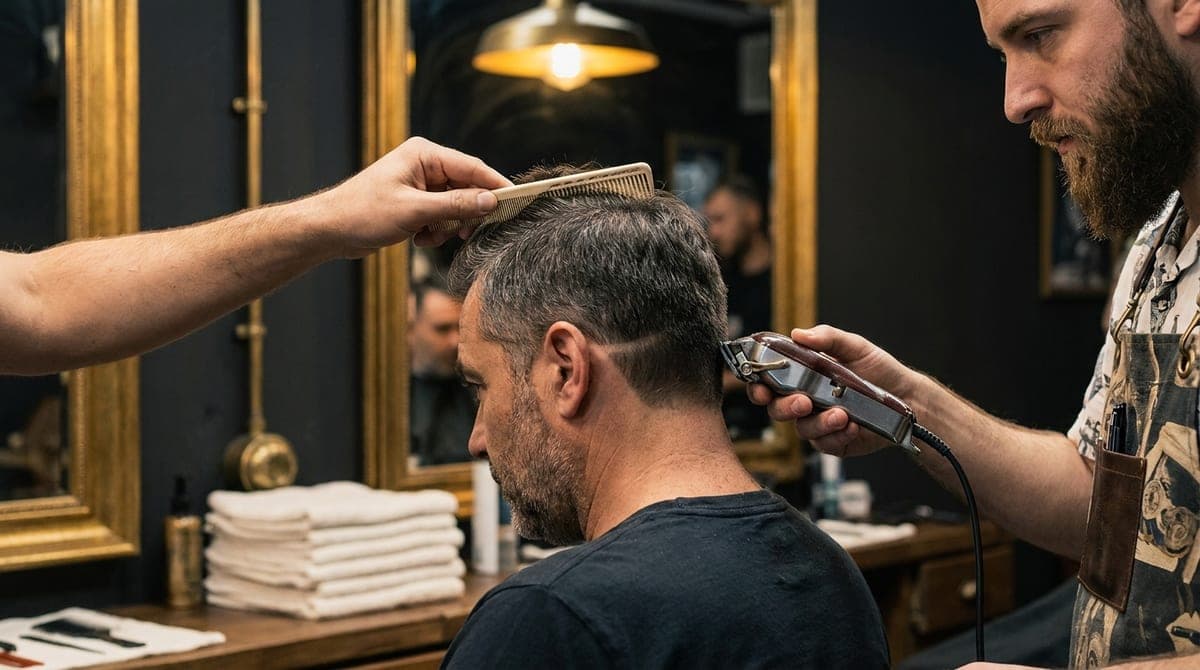
A drop breaks that constant rate on purpose, right behind and below the ear. The barber takes it down an extra grade or two at that single point, then brings it back up slightly as it curves towards the neckline. The reason is the skull itself. It curves in at the ear and back out at the jaw, and a perfectly level line drawn straight across that curve can look like it is floating at a slight angle rather than sitting on your head. Dropping the line at the one point where the skull actually changes shape fixes that without you noticing why it looks better.
Height and drop are separate decisions, the same way height and finish are. Our guide to the mid fade covers where a fade starts. This is about what the line does once it gets there.
Which heads it flatters
Round and square heads get the most out of a drop fade, because the curve gives an otherwise uniform outline an angle to work with. Stand a round head next to a mirror after a level fade and the whole shape reads as one continuous curve, ear to ear. Drop the line and there is a break in it, which is what makes the cut look cut rather than grown.
A longer or narrower head does not need the correction as badly, but it still holds up fine. The bigger factor there is what sits on top, since a drop fade under a lot of length reads differently to one under something short.
One practical thing worth checking before the clippers start: how your hair grows behind your own ear. Most men have never really looked. It grows in a slightly different direction there than on the rest of the side, which is part of why that spot is the one to build the curve around rather than any other.
15 to show your barber
- Low drop into a full beard. The fade drops an extra grade behind the ear and keeps dropping until it meets the beard line, so hair and beard read as one edge instead of two separate haircuts.
- High drop with a hard part. Blend starts near the temple, drops hard behind the ear, and a shaved parting line runs through the top. The two hard lines need to sit at matching angles or the cut looks lopsided from behind.
- Skin finish. The drop goes to bare skin at its lowest point, which is where the curve shows up clearest because nothing softens the line.
- Taper finish. The drop stops at stubble rather than skin. Quieter, still follows the curve, and grows out without the harsh regrowth line a skin finish leaves behind the ear.
- Blended into the nape. Instead of stopping level at the neckline, the drop keeps curving and meets the nape at an angle, so there is no straight line anywhere on the back of the head.
- Drop fade with a curly or afro top. Keep the density on top and drop the line low enough behind the ear that the curl has somewhere to sit over it. Cutting the top itself works the same as any curly hair fade, the difference here is just the shape of the line underneath.
- Drop fade with a quiff. Length swept up and back, sides kept quiet by the fade, and the curve behind the ear stops the whole head looking too symmetrical under all that height.
- Textured crop with a fringe forward. Short, choppy layers on top, the drop finishing low behind the ear so the fringe sits above a curved edge rather than a flat wall of clipper work.
- Drop fade with a comb over. A side part combed across rather than back. The eye follows the parting straight down the head, so the curve underneath matters more here than on most styles.
- Drop fade with a mullet. Faded and dropped at the front and sides, left long at the back. The curve is what stops the join between short and long looking like an accident.
- On fine or thinning hair. Worth a straight answer: dropping the line lower behind the ear draws the eye to that part of the head. If the crown is thinning too, ask for a taper finish rather than skin, and keep the drop modest rather than dramatic.
- Drop fade with an undercut disconnect. Long on top, clippers straight down the sides with no graduated blend at all, and the drop is cut only at the very bottom edge where the sides meet the neckline.
- Low drop, soft edge, no hard part. Everything blended, nothing shaved in. The version most men who are back every fortnight settle on once they have tried the harder options.
- Drop fade with a moustache, no beard. A low drop still gives a clean line down towards the jaw even without a beard to meet it, so the face keeps a defined edge either way.
- Drop fade, sides only. If the top does not need touching, a skin fade on the sides only at £16 gets the same curve for less than the full cut, useful if you are growing the top out between visits.
What to say in the chair
The easiest way to get a drop fade wrong is asking for it like a height rather than a shape. Say the word "drop" and point to behind your ear rather than describing an effect, and the rest of the conversation moves fast. Add the finish, skin or taper, and whether you want it soft or with a hard part, and that is a complete brief.
If you want to see how far the curve should go on your own head before committing to it, book a chair and we will mark the line in pencil first and show you in the mirror, not cut it in and hope.
Common questions
- What is a drop fade?
- A fade where the line curves down behind the ear before rising back up towards the nape, following the shape of the skull instead of staying level. A standard low, mid or high fade holds one height all the way round.
- Is a drop fade the same as a mid fade?
- No. Low, mid and high describe where a fade starts. Drop describes the shape of the line once it gets there. You can cut a low drop fade or a high drop fade, in skin or taper either way.
- Does a drop fade suit round heads?
- Especially well. The curve breaks up an outline that would otherwise look the same from every angle. On a narrow or oval head it still works, there is just less for it to correct.
- How much is a drop fade at Golden Scissors?
- It is not a separate line on the price list. Book a Skin Fade, £17 for 30 minutes, or a Taper Fade, £17 for 40, and ask for the drop shape in the chair.
- How often does a drop fade need doing?
- Every two to three weeks, the same as any fade. The curve behind the ear is usually the first part to blur, because the drop is the shortest point of the cut, so the first few days of regrowth show there before anywhere else.
Read next
Style Guide
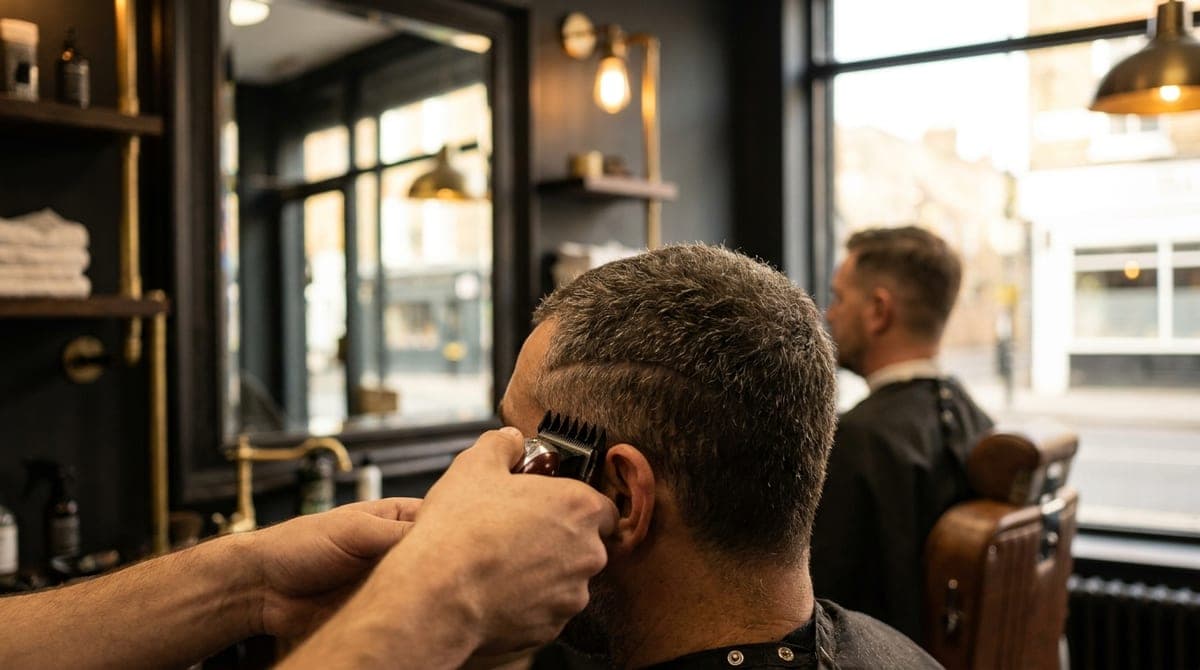
The Mid Fade Haircut and 19 Ways to Wear It
Where a mid fade starts, how it compares with a low and high fade in one table, the sentence to say in the chair, and 19 tops it suits. From Harrow Road.
7 min
Style Guide
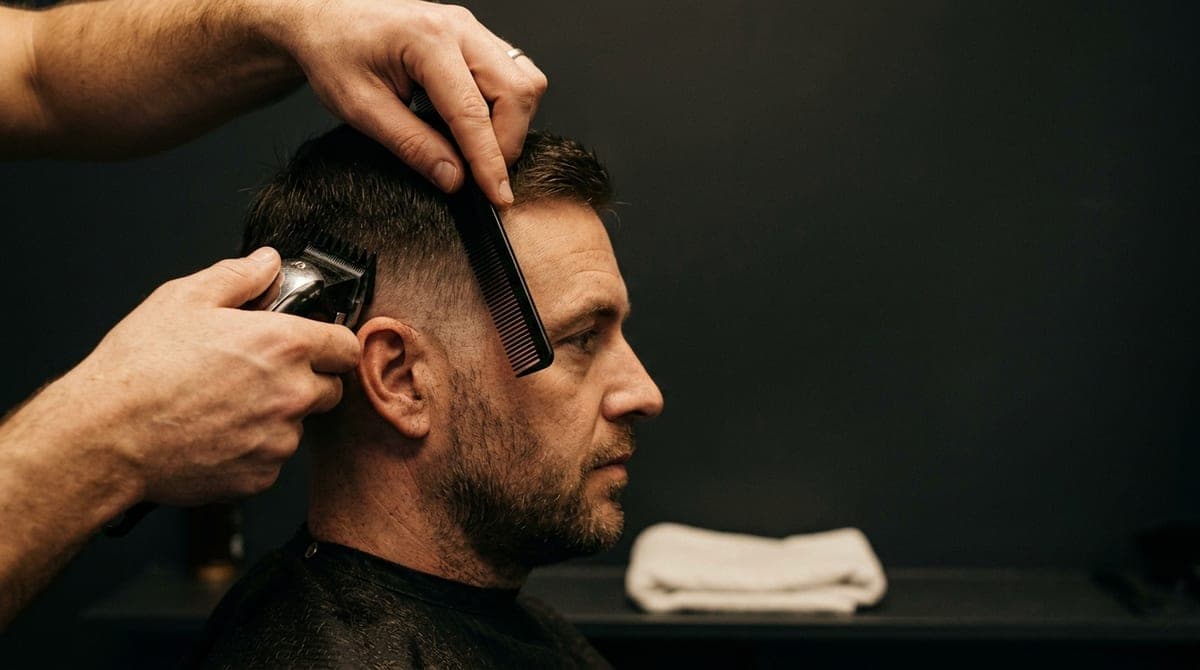
Skin Fade vs Taper Fade: The Difference
A skin fade goes to bare skin, a taper fade keeps a little length. Which one suits your hair, your head shape and how often you can get back to the chair.
5 min
Curly & Afro
Which Curly Hair Fade Suits Your Curl Type?
The best curly hair fade for loose waves, tight coils and a thinning crown in one table, why the top must be cut dry, and the £16 visit that keeps it sharp.
7 min