Most bad haircuts are one of four things: uneven, too short, a line in the wrong place, or the right cut on the wrong head. A barber can level, blend and soften. Nobody can put length back. So how to fix a bad haircut is really about sorting which parts can be dealt with this week and which parts are just time, then not making it worse while you wait.
Here is what we would do with it, and how long the rest of it takes.
Give it two days first
A haircut does not look like itself for about forty-eight hours. It was styled wet, with product you do not own, by someone standing behind you under a downlight, and then you judged it from eight inches away in a mirror while still wearing the gown. Clipper lines also sit harder on day one and settle as the hair relaxes.
Wash it. Dry it the way you actually dry it. Look again on day two, in daylight, with your own hands in it.
What will not improve overnight: length, a line that is not level, a step in the blend, a neckline cut too high. Those are real, and the rest of this is about them.
How to fix a bad haircut in the chair
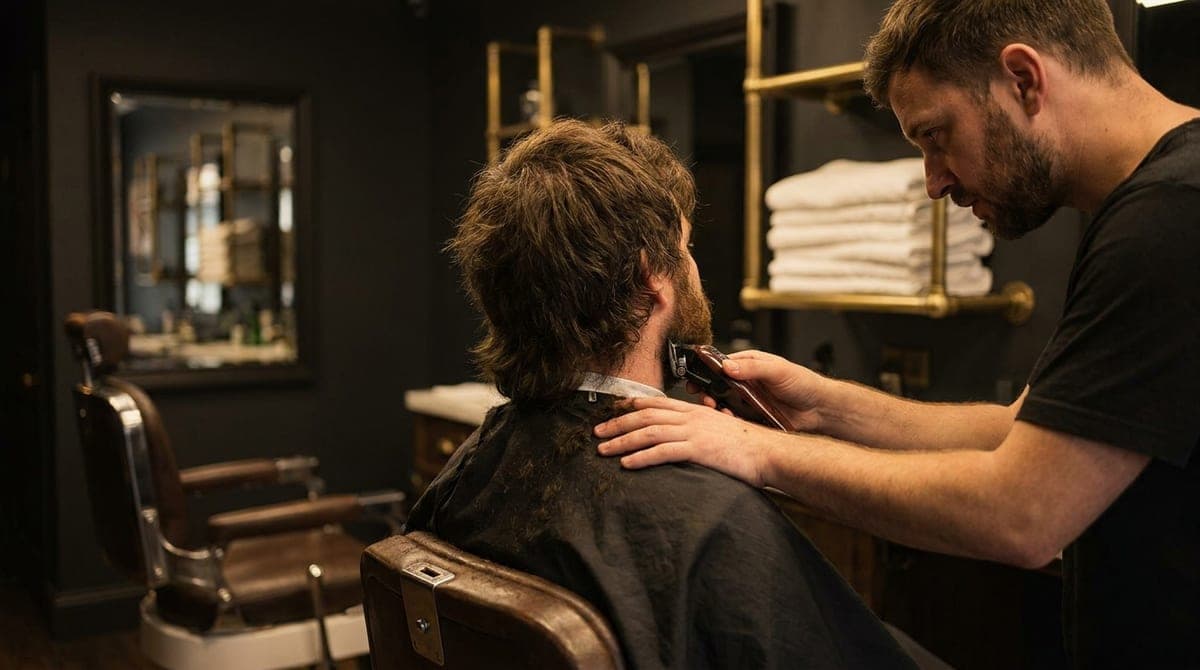
Nearly everything a second barber can do is one of three moves, and all three cost length.
Level it. One side shorter than the other, sideburns at different heights, a fringe cut on a slant. The fix is to bring the longer side down to meet the shorter one. It is quick, it works, and you walk out shorter than you arrived on your good side.
Blend it. A step, a shelf, a visible ridge where two guards met and were never joined up. This is the most fixable fault there is. A barber runs the grades between the two lengths and the line stops existing. It needs a millimetre or two above the step to work with, so it is worth doing early, before three weeks of growth has moved the shape around it.
Soften it. A neckline squared off too high, a hard line drawn too far back at the temple, a fade line carried up past the widest part of your head. None of those can come down, because the hair below them is already gone. What can be done is take the hard edge off, so a block becomes a taper and your eye stops going straight to it. A square neckline redone as a natural one is the biggest improvement available on most bad cuts, and it takes two minutes.
One case sits outside those three. A clipper that dug in and took a patch down to the skin cannot be repaired, only met. Either everything around it comes down to match, which means a much shorter haircut than the one you wanted, or you leave it two or three weeks until there is enough in the patch to blend into. If it is at the back where you never see it, waiting is the better trade.
What no barber can fix
Length. That is the entire list, and it covers most of what men are actually upset about.
If you asked for two inches off and got four, no technique gets the two back. What a good barber does instead is change the cut to suit what is there now. Four inches gone off a long style is not a ruined haircut, it is a crop you did not order, and a crop with a proper fringe and some texture through the top is a cut men book on purpose. That is not a consolation prize, it is the only honest option on the table.
The other one is over-thinning. If someone has gone through the top with thinning shears or a texturising blade and taken out too much, the hair is short inside the length rather than at the ends. It will not hold a shape, it separates when you style it, and cutting more does not help.
How long it takes to grow out
Hair grows about half an inch a month, near enough a centimetre and a quarter, and at close to the same rate all over your head. Clipper guards run in eighths of an inch, which gives you a rule worth carrying: about one guard number a week.
- Sides taken too short. You asked for a 3 and got a 1. Two weeks and you are back at a 3. It is the fault men are angriest about and the one that costs the least time.
- A skin fade you did not want. Ten days and there is no bare skin left anywhere. Three to four weeks and the contrast has gone with it.
- A neckline cut too high. Two to three weeks to cover it, and it stops being noticeable sooner than that once the hard edge is softened. If it was a tidy at home that went wrong, how to shape a neckline at home is the version that does not take it higher.
- An inch back on top. Two months. Two inches, four months.
- A fringe cut too short. Six to ten weeks depending on where it sat to begin with. Fringes feel worse than they are, because a fringe is the only part of your haircut you see all day.
- Over-thinned hair on top. Three to six months, and no product shortens it.
- A hard line at the temple or a parting shaved in. Only the outline was cut, so two to three weeks and there is no trace of it.
If you want the same sort of timetable for haircuts that went right, we set out how often each cut actually needs the chair.
Getting through the grow-out
Growing something out is not the same as leaving it alone. A cut halfway back has no shape at all unless somebody gives it one.
Book a single shaping trim in the middle of the wait. On a top you are growing, that means the sides and the back come down a little and the top is not touched, so the proportion stays right while the length catches up. A man who refuses to let anyone near his hair for four months looks worse in month three than he did the week of the bad cut.
Two things help. A matt paste or clay gives short, blunt hair something to hold onto and hides an uneven line, where a wet-look product separates the hair and shows every gap. And hats are fine, whatever you have been told. A hat does not slow hair down.
What does not help is anything sold as a shortcut. Nothing on a barbershop shelf changes the rate your hair grows. If growth or thinning is the real worry rather than this haircut, that is a question for a GP or a dermatologist.
Going back and asking
Go back within a few days rather than three weeks later. A step can still be blended on day three. By day twenty the hair around it has grown and the same repair costs you more length. If it is the third bad cut in a row from the same chair, that is a different question, and we cover when switching barbers is the right call.
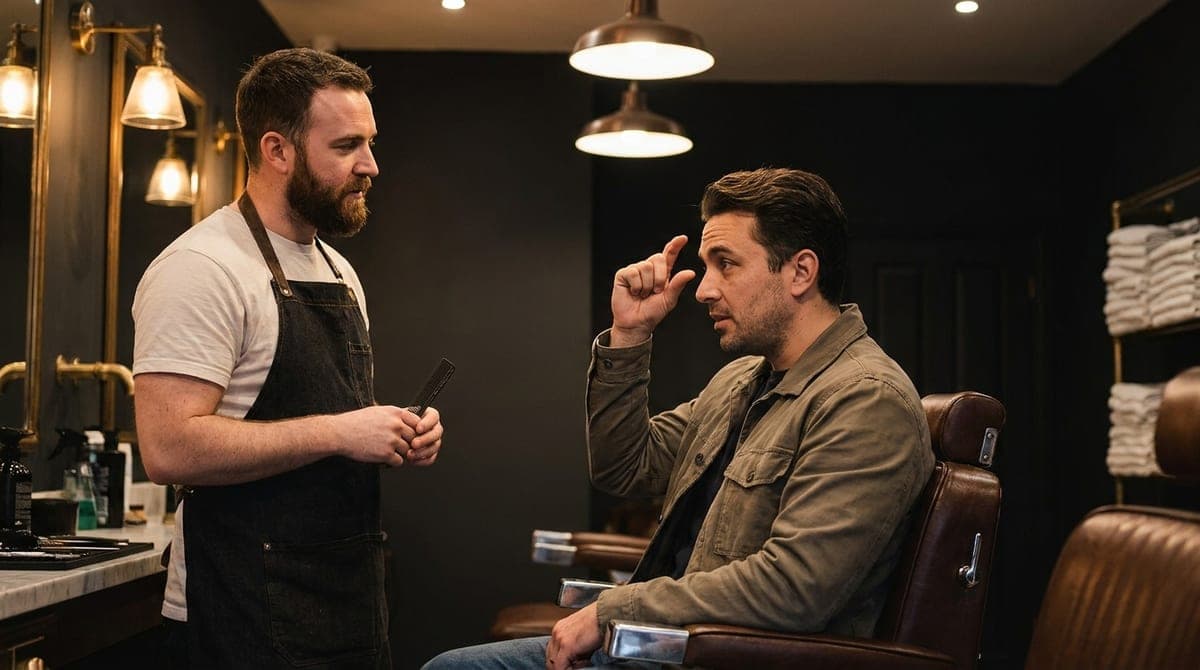
When you get there, describe the fault and not the feeling. "The left side is shorter than the right" is something a barber can pick clippers up and deal with in five minutes. "I hate it" is not, and it puts the man who is about to sort it out on the back foot.
Then go in specific next time, because a lot of bad haircuts start as a bad conversation rather than bad hands. Four decisions cover it: the top, how short the sides go and how high that climbs, the neckline, and whether the edges get lined up. The full script is in what to say when you sit down, and if numbers are the part that goes wrong, every guard in millimetres is there too.
If you want somebody to look at it before you commit to anything, walk in. We are on Harrow Road with six chairs going, and it takes about thirty seconds to tell you whether it is a two-minute fix, a shorter haircut, or a fortnight of leaving it alone. A corrective cut books as a standard Haircut, £15 for half an hour. If the answer is patience we will say so, and you can book the proper one for when it has grown back.