
Most of the damage is done in the first hour, before you have properly settled. You get into bed with damp hair, it dries into whatever shape the pillow decides on, and by morning there is a flat side, a kink at the crown and a fringe pointing somewhere you did not ask for. How to protect hair while sleeping comes down to three things: get it dry first, cut down the friction, and take the product out before you lie down.
How to Protect Hair While Sleeping
What happens to your hair overnight, how to protect hair while sleeping, and the twenty-second morning fix. From the barbers on Harrow Road.
6 min readGolden Scissors, Maida Vale, London
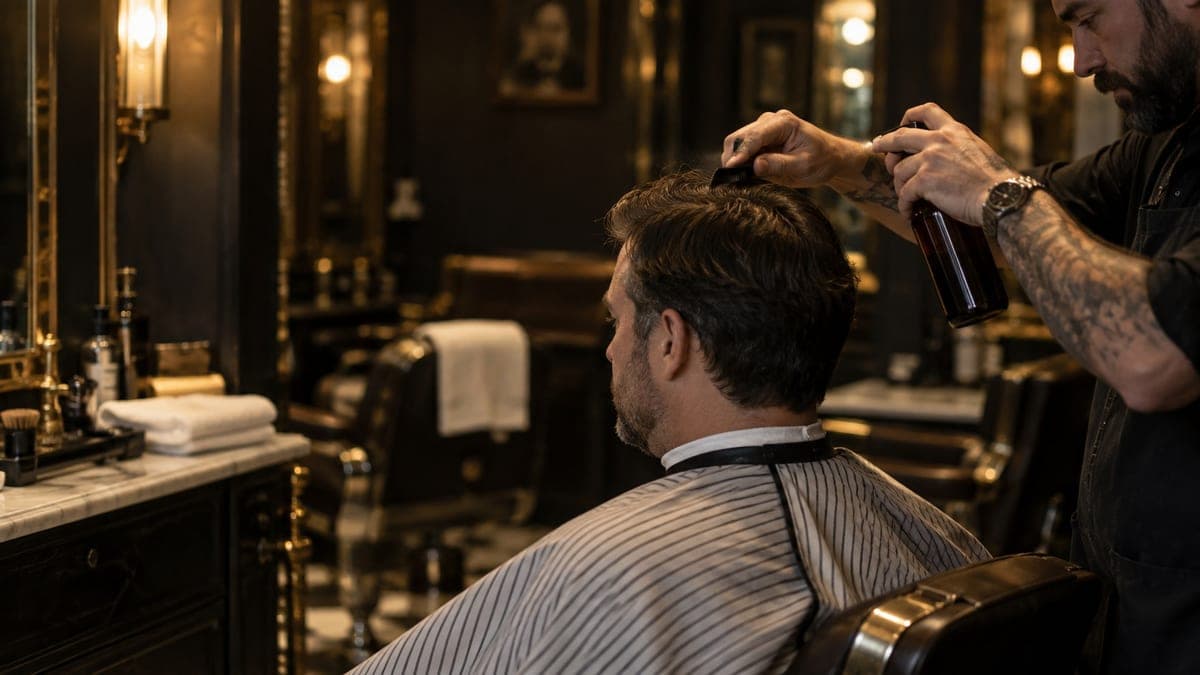
What actually happens to your hair overnight
Two things, and they compound.
The first is water. Wet hair is genuinely weaker than dry hair. The bonds that hold a strand in its shape are broken by water and re-form as it dries, which is the whole reason a blow dry works at all and why it drops out in the rain. Go to bed damp and those bonds re-form against a pillowcase, so your hair sets into a shape the fabric chose rather than one you did. Do it night after night and the constant stretching frays the outer layer of the strand, which is where split ends come from.
The second is friction. You move around more in the night than you think, and cotton does not slide. It grabs. Every turn drags hair across a rough surface, and rough surfaces lift the cuticle.
Neither of these ruins anybody's hair in a week. Both of them, every night for a year, turn up as a frizzy top layer and ends that will not sit down.
How to protect hair while sleeping
Dry it first. This is the one that decides everything else. It is also the one men skip. You do not need a dryer to do it properly, though it is quicker. Towel it, leave it twenty minutes while you do something else, and get into bed when it feels cool rather than cold and damp. If you shower at night and cannot face the wait, move the shower to the morning and be done with it. We have written before about how often to wash it, and the timing of it matters nearly as much as the frequency.
Take the product out. Whatever went in at eight in the morning is still in there at eleven at night, holding a shape and carrying everything the day put on it, and old product against a pillow is exactly the friction you are trying to avoid. Clay is water-based and shifts fastest, a splash under the tap most nights. Wax and an oil-based pomade sit at the other end: water alone slides off them the way it does off any oil, so what you are using decides whether a rinse is enough or it needs an actual shampoo - and an oil-based pomade is the worst of the three for this.
Loosen anything tight. If you tie longer hair back, take it out at night or move it to a soft loop sitting low at the neck. A tight band in the same place every night for months genuinely does thin the hair where it sits, and it shows up at the temples first.
Pillowcases, durags, and what is worth buying
The silk pillowcase question comes up in the chair most weeks, so here is a straight answer. The physical argument is sound. Silk and satin are smoother than cotton, so hair slides instead of catching, and they pull less moisture out of it overnight. The evidence behind it is thinner than the people selling pillowcases would have you believe, and most of what you will read online is written by someone with satin to shift. There is no trial we would put in front of you that says a pillowcase fixes hair.
What we can say is that a satin one costs less than a haircut. If your hair is long, fine, bleached, or you wake up with a halo of frizz, spend the tenner and find out. If you have a grade two all over, keep your money. Friction has very little to do to hair that is six millimetres long.
Coverings do more than pillowcases do, for a narrower group of men. If your hair is afro-textured or tightly coiled, a durag, a bonnet or a satin scarf is the most useful thing on this page by a distance. It keeps the whole head off the fabric instead of just the part you happen to be lying on, it holds moisture in overnight, and it stops a fresh shape being crushed flat on one side. Men come in on a Saturday for an edge up and a taper and ask how to keep it looking like that until Wednesday. This is most of the answer. If you are brushing for waves, the durag is doing a second job as well, pressing the pattern flat while you sleep, and the rest of how 360 waves are trained has its own post.
On straight or wavy hair a durag mostly just flattens the top, so we do not hand that advice out to everybody.
The morning, in twenty seconds
You do not need to start from scratch. Bedhead is almost always hair holding a shape that water will let go of, so the fix is water, not more product.
Wet your hands, run them through the flat side and the kink at the back, then either give it five minutes or thirty seconds of a dryer on low while you push it where you want it. Product after that, if you use any. Putting clay on top of a dry kink glues the kink in place, which is why your hair often looks worse at ten in the morning than it did at eight.
If you wake up damp at the hairline, and plenty of men do once the heating comes on in a warm bedroom, rinse it rather than adding more on top. Salt and yesterday's clay is the combination that has your scalp itching by Thursday.
What your cut has to do with it
More than the pillowcase does, honestly.
Weight is the enemy overnight. A top left long and heavy will always crush, because there is more hair to fold and nothing holding it up. Hair cut to one length all over shows a flat side badly. A textured top that has been point cut recovers fastest, because the ends are already broken up, so a kink in one section does not read as a line across your whole head.
If you spend ten minutes every morning fighting the same piece of hair, mention it when you next sit down. Most men never do, because they have decided that is simply what their hair does. Usually the answer is a centimetre off the top and some weight taken out of the crown, which costs nothing on top of a £15 haircut and buys back the ten minutes.
If you change one thing tonight, go to bed dry. Everything else here is worth a few percent. That one is worth more than the rest of them put together.
Common questions
- Is it bad to sleep with wet hair?
- For your hair, yes, though not for the reason your nan gave you. Damp hair is weaker and it sets into whatever shape the pillow puts it in. It will not give you a cold.
- Do silk pillowcases actually work?
- They cut friction, which is real enough. The evidence is thinner than the people selling them suggest. Worth trying if your hair is long, fine or frizzy, and pointless on a grade two.
- Should I wash my hair at night or in the morning?
- Morning, if you shower late and get straight into bed. If you wash at night, leave enough time for it to dry properly before you lie down.
- Why is my hair always flat on the same side?
- You sleep on that side and it dried in that position. Water releases it. Product on top of it will not.
- Does a durag work on straight hair?
- Not really. It mostly just flattens the top. Durags, bonnets and satin scarves earn their keep on afro-textured and tightly coiled hair.
Read next
Barbershop FAQ
How Often Should Men Wash Hair? By Hair Type
Two or three times a week for most men. A table for every hair type from fine to afro, whether a daily wash is too much, and how often boys should wash.
9 min
Products
Clay vs Pomade vs Wax: Which Do You Need?
Clay vs pomade vs wax explained by barbers who see the results three weeks later: what each one does, which suits your cut, and how to wash it out.
6 min
How To
How to Style a Textured Crop
How to style a textured crop in under two minutes each morning, using the product and finger-work our barbers on Harrow Road actually recommend.
5 min